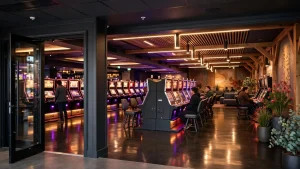
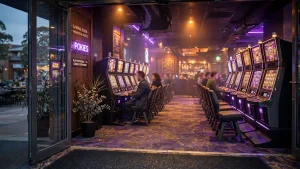
A nearby casino listing can identify a property, but it does not confirm which facilities are open or when.
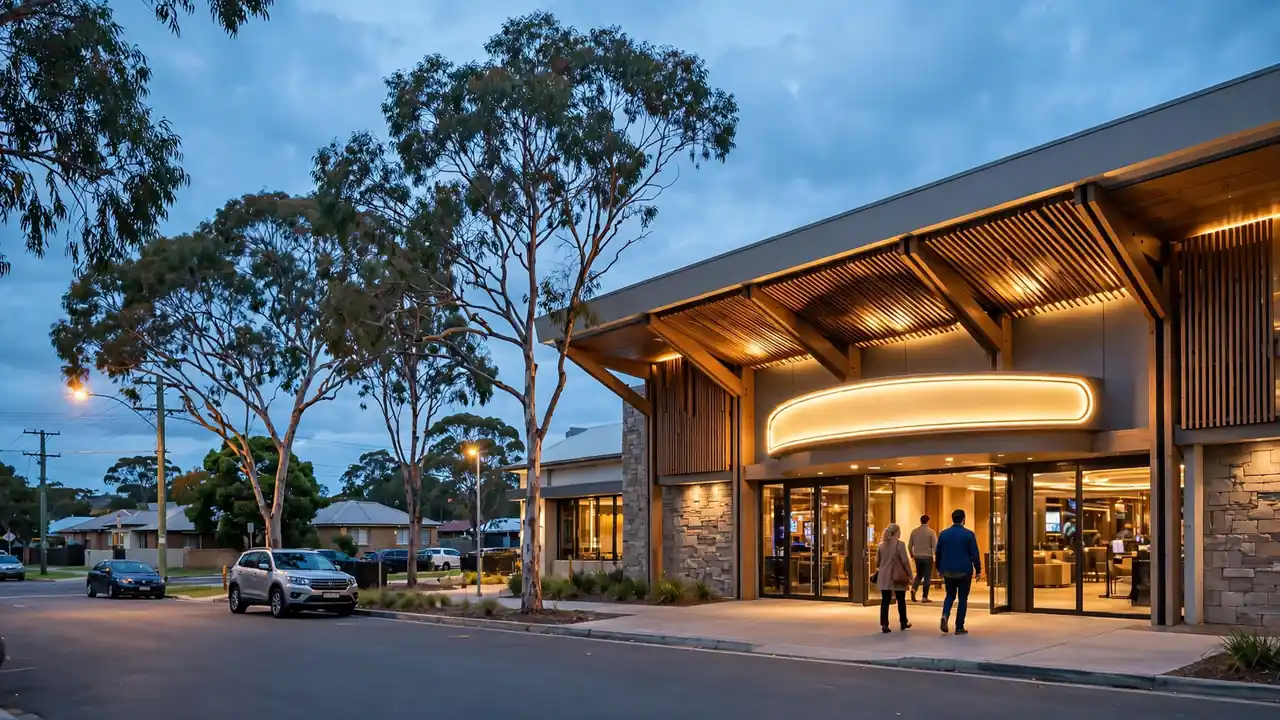
A nearby result needs to identify a physical casino, not merely a hotel, entertainment complex or gambling-related business. Names can be similar, and a property may contain several separately run facilities. From the counter side, that distinction mattered: a search result could point to the right building but still leave unclear which part of it was being described.
Australia’s casino industry is licensed locally. Each casino operates under a licence issued by the state or territory where it is located, so there is no single national venue licence that confirms every detail about every property. A casino’s identity and jurisdiction come first; the word “open” on a listing cannot establish either one.
The scale is national, but the venues are specific. A specialist casino review reports more than 20 full-scale casinos across Australia’s eight states. That is a count from that type of publication, not a permanent register: properties and classifications can change. For a nearby result, the useful question is whether it names an identifiable, physical casino in the relevant state or territory.
If you’re looking for pokies open near you in Australia in 2026, this list offers a starting point for checking online casino options. Review each operator’s available details and confirm that its services are suitable for your location.
LuckyVibe
LuckyVibe is listed with a Curaçao Gaming Control Board licence, OGL/2023/176/0095, held by Hollycorn N.V.
GoldenCrown
GoldenCrown is listed with a Curaçao Gaming Control Board licence, OGL/2023/176/0095, held by Hollycorn N.V.
Uptown Pokies
Uptown Pokies has operated since 2017 under a Curaçao licence. The stated minimum deposit is A$20.
JustCasino
JustCasino is listed with a Curaçao Gaming Control Board licence.
DragonSlots Casino
DragonSlots Casino is listed with a Curaçao Gaming Authority licence, with Jumpman Gaming Ltd identified as the operator.
Vegaz Casino
Vegaz Casino is listed with Curaçao licence OGL/2024/1335/0780. Its stated minimum deposit is EUR 20.
Roby Casino
Roby Casino is listed with a Curaçao eGaming licence, with Roby Games Ltd identified as the operator.
Kingmaker
Kingmaker lists crypto payouts at around 90 minutes and fiat payouts in 1–5 days. Its stated minimum deposit is A$30.
Wild Tokyo
Wild Tokyo lists crypto payouts in 30–60 minutes and fiat payouts in 1–5 days. Its stated minimum deposit is A$10, and it has a Curaçao licence.
Thor Casino
Thor Casino is listed with a Curaçao licence from Antillephone N.V. (Versus Odds B.V.). The stated minimum deposit is EUR 20.
I learned not to treat a building name as a complete description. A large property can combine accommodation, restaurants, events and casino facilities, while public access rules may differ between them. Major Australian casinos require valid photo identification for entry. That requirement is practical, not decorative: the venue has to establish who is entering and whether the person meets its conditions.
“Nearby” also depends on what the result actually locates. A map pin may mark a hotel entrance, a broad property address or a general entertainment precinct rather than the casino entrance. The distinction can matter when a venue occupies a substantial site or when a listing uses a familiar brand name without specifying the facility.
I would first match the result’s name and address to the physical casino, then establish which state or territory regulates it. That keeps a local venue separate from an online gambling page or a general directory entry. A website’s appearance in results does not turn it into a land-based casino, and a nearby hotel does not prove that its casino facilities are accessible.
The wording “near me” sounds simple. The venue is the fact that has to hold up.
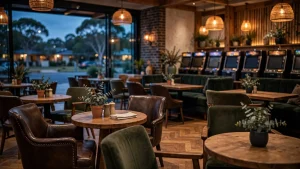 Pokies in Adelaide: RTP, Venues and Online LimitsLearn what RTP can indicate over a very large number of plays, and where venue hours, airport searches and online offers leave…
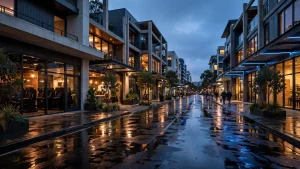 Pokies in Perth: opening hours, returns and rulesLearn why an “open now” listing cannot confirm machines are running, and how the guide covers returns, Crown Perth, online deposits and…
“Open now” can describe a search listing, a property or the casino floor itself. Those are not interchangeable. A result may place a nearby venue at the top of a local search, but its position does not confirm that the part of the property being sought is accessible at that moment. The distinction matters most when a listing is brief: a single open-or-closed label can flatten several different kinds of access into one.
The national baseline is clear but limited: all major Australian casinos operate 24 hours a day. That describes casino operation at a broad level. It does not establish the current status of every venue, nor does it prove that every facility within a property is available whenever the casino is operating. A restaurant, event space or other service can have its own arrangements. The word “open” needs a subject.
From behind a counter, I learned to read the label as a summary, not as the whole operating picture. A result marked open is useful as a starting point. It is not a substitute for identifying the venue and the specific access being described. “Open” is the headline. The detail sits underneath.
This also helps separate a casino from a pub or another gaming venue. A search for places with gaming nearby can return different kinds of businesses, not just casinos. The national 24-hour statement applies to major casinos; it should not be carried across to every pub or venue that appears in the same local results. Similar wording does not make the businesses equivalent.
Legal Compliance
The Interactive Gambling Act 2001 prohibits operators from providing real-money online casino games to people in Australia.
There is another boundary worth keeping clear. A physical casino and an online gambling service are not the same thing. The Interactive Gambling Act 2001 prohibits operators from providing real-money online casino games to people in Australia. The Australian Communications and Media Authority (ACMA) is the federal regulator responsible for enforcing that law and monitoring compliance with federal interactive gambling rules. A website that appears in a result, loads successfully or accepts account traffic is not thereby an Australian-licensed online casino.
That difference matters because an online page can look like a continuation of a venue search while being a separate service altogether. ACMA can ask Australian internet providers to block websites that provide prohibited interactive gambling services or advertise them in Australia. Following enforcement action, the authority has blocked more than 1,455 illegal gambling and affiliate websites since November 2019. The figure describes enforcement activity, not a measure of which physical casinos are open.
The reported number of illegal services that have left the Australian market is not consistent across the available figures: one account gives more than 210 since enforcement began in 2017, while another gives more than 190 since that year. That disagreement is a reason not to treat a changing website address or a successful page load as proof of legal status. It says nothing about whether a nearby physical casino is operating.
For a local result, the practical question is therefore narrower than the label suggests: which venue is being described, and does the information refer to the casino itself or another part of the property? A map marker, business profile or broad “open” indicator may answer only the first part. The national operating pattern supplies context, but it cannot turn a generic listing into a live confirmation for a particular place.
I have seen how a short status label becomes an expectation. People read “open” as a complete promise; the listing may only be compressing a category and a time into a few words. The responsible reading is plain: major Australian casinos operate around the clock, while a local status should be understood as information about that listing, not a guarantee about every service at the address. Small distinction. Big difference.
A request for gaming machines at six or seven in the morning sounds like a question about a door time. In practice, the useful starting point is whether the place being considered is a major Australian casino. All major Australian casinos operate around the clock, so those early hours fall within their stated daily operating pattern. That is a national baseline, not confirmation that any nearby result refers to such a casino.
I learned to separate the hour in a listing from the operation of the venue itself. A time shown beside a place can describe a particular service, an entrance or a business within a larger property; it does not automatically describe the casino floor. Nor does a general statement about major casinos establish the status of a specific address. The name and location have to match the intended venue before the hour means much.
That distinction matters when comparing an early start with access later in the morning. If a casino operates continuously, six, seven and eight in the morning are not, by themselves, unusual opening times for the casino. But the broad operating pattern cannot settle whether a particular listing is current or whether it refers to the right place. The wording may look decisive. The match may not be.
A map result can also make a category seem clearer than it is. A nearby gaming venue is not necessarily a casino, and a label referring to pokies does not prove that the listed business is a major casino. I would treat the venue name and the type of property as separate checks: first establish what the place is, then interpret any hours attached to it. This is more reliable than reading “open” as a complete description.
The early-morning question is often framed as whether machines are available before the ordinary day begins. The national operating pattern for major casinos answers the broad part: these properties run continuously. It does not convert every search result, nearby gaming venue or separate business in a casino complex into a confirmed all-hours facility. A clock time alone cannot do that work.
Entry has its own basic condition. The minimum age for casino entry in Australia is 18, so an early arrival does not change the age requirement. For major casinos, valid photo identification is required for entry. That is an operational check, not a detail that can be inferred from a map pin or an hours label. The threshold stays the same at breakfast time.
I have seen people treat “open at seven” as if it were a promise about the whole visit: the right property, the right entrance and the relevant gaming area all available at that moment. Those are different claims. The fact that major casinos operate 24 hours supports the general expectation of continuous casino operation; it does not make every element of a property identical in its schedule. A listing still needs to be read for what it describes.
The same reasoning applies when the requested time is six in the morning or eight. Shifting the hour by one does not solve uncertainty about the venue. If the result names a major casino, the national baseline is relevant. If it names a different kind of gaming venue, or gives no clear indication of the property, the casino-wide operating pattern should not be transferred to it.
From the counter side, the most misleading word in an hours label is “open” when its subject is left vague. It can sound like a complete answer while naming neither the facility nor the activity. The better reading is narrow: a continuous operating pattern for major Australian casinos, and a separate question about the particular place the listing identifies.
So an early start is not inherently incompatible with casino operation in Australia. The distinction is between a broad pattern and a confirmed local detail. A result that appears nearby may answer the location question only after the venue is identified; a displayed time may still refer to something other than the casino. That is the limit of the general answer. Short, but important.
“Nearest” is a geographic result, not a guarantee that the place shown is a casino. Australian listings can cover different kinds of gaming venues, and a result attached to a suburb may refer to a facility elsewhere in the wider area. I have seen the distinction blurred in listings: the label looks precise, while the location attached to it may not be the venue’s street address.
The national picture is spread out. A specialist casino review counts gambling activity in 147 Australian cities, but that figure should be read as that publication’s snapshot, not as a fixed map of casino locations. A city counted for gambling need not contain a full-scale casino. Australia’s casino industry is regulated by state and territory, with each casino operating under a licence from its own jurisdiction. That local structure matters more than a broad national count when checking a particular place.
Sydney gives a sense of how concentrated facilities can be within one city. A specialist casino directory identifies it as Australia’s largest gambling city and lists 11 gambling facilities there. That is a directory’s classification and count; it does not mean that every facility is a casino, or that all are clustered around the same point. A result for Sydney can still leave a substantial distance between the mapped location and the venue someone has in mind.
The Northern Territory provides a different scale. A specialist review lists three casinos across three cities in the territory, and identifies Alice Springs as the city with the most, with one casino. The wording sounds like a ranking, but the number also shows its limit: the city’s leading position in that comparison amounts to a single listed casino. Lasseters Casino is at 93 Barrett Drive, Alice Springs, NT 0870. A street address is more useful for judging proximity than a result that gives only the city name.
This is why a suburb name such as Redcliffe cannot, by itself, settle whether the closest result is a casino. The relevant question is what facility the listing identifies and where its entrance is, not whether the suburb appears in a broad regional search. The same applies to a result described as nearby: map distance and local-area labels can point to different practical journeys.
When I have had to make sense of a location listing, I separate three things: the category of venue, the named locality, and the actual address. A casino in a city is not necessarily in the suburb named in a result. Nor does a city-level count tell how many casinos sit within convenient reach of a particular street. The map pin needs to belong to the venue itself.
There are more than 20 full-scale casinos across Australia’s eight states, but that national spread says little about the nearest one in a particular district. Local geography is decisive. A city count can provide context; a venue name and address establish what the result is actually pointing to.
Licensing
Australia's casino industry is licensed locally, with each venue operating under a licence issued by the state or territory where it is located.
Yes. All major Australian casinos operate around the clock. For someone looking for a casino that does not shut overnight, that is the central distinction: continuous casino operation is a real feature of the major properties, not just a phrase used in a listing.
The wording still needs to be read narrowly. “Open 24 hours” describes the casino’s operating pattern; it is not a blanket promise that every part of a property runs without interruption. A casino can sit within a larger complex, and the property’s restaurants, entertainment areas and other facilities are separate from the casino itself. Their schedules should not be inferred from the casino’s hours.
I learned to separate those things because a venue can look like one operation from outside while different parts are managed on different schedules. The broad statement about major Australian casinos concerns casino operations. It does not mean that every service attached to a property is available at every hour. A continuous casino, in other words, is not the same as a continuous all-purpose venue.
That distinction matters when “24 hours” is used as shorthand for an entire night out. The casino may be operating, while another facility within the same complex has its own arrangements. A listing that describes a property as open around the clock can therefore be accurate in one sense and still say little about a particular restaurant, event space or other service.
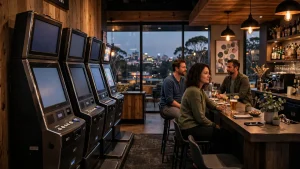 Best Pokies in Canberra: What Can Be VerifiedLearn why a venue’s general opening hours may not confirm pokies access, and what to check before relying on a listing or…
 Best Pokies in Melbourne: How to Verify Venue ClaimsLearn why map pins and “near Melbourne Airport” labels do not confirm gaming facilities, and how to check a venue’s current details.
There is also a difference between major casinos and the wider category of gaming venues. The national statement applies to major casinos; it should not be stretched into a claim that every venue with gaming operates continuously. The label on a map or directory is not enough to establish that two different kinds of venue share the same hours.
For a location-specific decision, the useful question is therefore not simply whether Australian casinos can operate 24 hours. They can, and all major casinos do. The practical distinction is whether the intended destination is one of those casinos, and whether the part of the property relevant to the visit is operating on the same basis. Those are separate checks.
I would treat “24-hour casino” as a description of the casino’s operating status, rather than a guarantee about every door, service or facility on the site. That is not a technicality. It is how a complex venue’s hours are understood without turning one accurate statement into a broader promise.
The short answer remains clear: major Australian casinos are open around the clock. The phrase does not extend automatically to every gaming venue or to every facility inside a casino property. Continuous casino operation. Not everything else.
Late-night plans often start with a familiar assumption: a venue may stay open past dinner, then close before morning. That pattern does not describe major Australian casinos. They operate around the clock, so the usual question of whether the doors shut at a particular hour is not the right starting point for a late visit.
Attention: For major Australian casinos, continuous operation is the baseline, meaning a standard evening closing time should not be assumed.
I have seen the wording “open late” treated as if it identifies a special operating window. In this setting, it can be misleading. For a major casino, late night is not necessarily an extension of daytime hours; continuous operation is the baseline. The distinction matters because a closing time implies a clear point when the venue stops operating. For these casinos, that daily cut-off is not part of the general pattern.
That does not turn every late-night plan into a confirmed visit. The national operating pattern describes major casinos as a category; it does not establish the arrangements of every property or every part of a venue. Nor does “open” mean that every facility within a property follows identical hours. The useful conclusion is narrower: a standard evening closing time should not be assumed for a major Australian casino.
This changes how I read a late-opening label. It may simply be describing a venue that remains in operation through the night, rather than one with a special late session. The phrase sounds like a timetable. The operating pattern is broader.
There is also a difference between asking when a casino closes and asking whether a particular late-night visit will work. The first has a national baseline for major casinos; the second depends on the venue and the purpose of the visit. Those are separate questions. A continuous operating pattern answers only the first.
So, for major casinos, “till late” can understate the point: the operation does not generally end at the close of the evening. But that should not be stretched into a blanket promise about every venue or every service. The cleanest reading is simple: late-night operation is part of the all-day pattern, not proof of a special closing-time exception.
A national statement that major Australian casinos operate around the clock is not a calendar for every property. It describes the broad operating pattern, not a confirmed Good Friday schedule. When a date-specific answer matters, the relevant detail is the named venue’s published arrangements for that date.
That distinction can look fussy from the outside. From the counter, it is basic: a general operating pattern and a particular day’s arrangements answer different questions. A result that says a venue is open today may reflect its ordinary schedule, while Good Friday can call for a separate notice. Neither statement automatically settles the other.
Australia’s casino industry is regulated by state and territory. Each property holds a licence issued by its local jurisdiction, so operating arrangements are not established by one national holiday timetable. A broad answer about Australia cannot confirm what a casino in a particular state has scheduled for Good Friday, or whether its arrangements have changed.
I treat the date and venue as a pair. “Good Friday” on its own is not enough to establish a property’s hours; neither is a location without the date. The useful confirmation is information that identifies the casino and explicitly applies to the holiday in question. A general hours page may still be useful, but it should not be read as holiday confirmation unless it says so.
A general operating pattern does not confirm a Good Friday schedule. The dependable approach is to seek the venue's own current notice or contact channel to ensure the information applies to the specific holiday date.
The same care applies when the wording is simply “open today” or “open tonight”. On a changing calendar date, those phrases may point to the day’s schedule, but they do not tell the whole story unless the listing makes clear which venue and date it covers. An old notice, a standard hours panel or a brief search-result summary can leave the important qualification out. Small wording, large difference.
For Good Friday, the sound approach is to look for the venue’s own current notice or contact channel and check that the information is for the intended date. If a third-party listing gives a different answer from the venue, the conflict is not resolved by choosing the more convenient result. It is a reason to seek a direct, date-specific confirmation before setting out.
Other calendar dates deserve the same treatment. A schedule published for an ordinary day does not establish arrangements for every public holiday, and a statement about one holiday does not automatically apply to another. The date can change the answer; the property and its local jurisdiction remain central.
I would not turn a national 24-hour operating pattern into a promise about an individual venue’s Good Friday hours. That leap is where a broad fact becomes a misleading local answer. The dependable distinction is straightforward: national information describes the industry; the venue’s own date-specific notice speaks to its schedule. When the date is the point, the date has to be named.
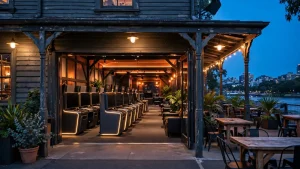 Best pokies in Brisbane: hours, access and checksLearn why an “open now” listing does not confirm gaming-room access, and how to check Brisbane venue hours without treating directory details…
 Best Pokies in New South Wales: What to VerifyLearn why “open now” does not confirm a working or accessible machine, and how venue-level checks limit claims about NSW pokies.
A general statement about casino hours does not settle whether a particular gaming venue admits guests on Christmas Day. All major Australian casinos operate around the clock, but that describes their ordinary operating pattern; it is not a Christmas schedule for every property. A venue’s usual hours and its arrangements for a specific holiday are separate things.
I have seen how “open” can do too much work in a listing. It may describe the casino floor, the wider property or a page that has not been updated for a holiday. Those are not interchangeable claims. A Christmas Day result is useful only to the extent that it identifies the particular venue and its arrangements for that date.
There is no single national Christmas timetable to apply across Australia. Casino properties are licensed by their state or territory, and the industry is regulated at that level. So a broad national fact about round-the-clock operation cannot establish that every casino has the same holiday access arrangements. Nor does the existence of a nearby venue prove it will be available on Christmas Day.
That is the distinction behind searches for a casino open nearby on Christmas Day: the national baseline describes major casinos generally; the holiday question is specific to the property. A result that simply repeats ordinary hours does not answer it. A clear, date-specific notice from the venue is a different kind of information.
The wording matters. “Open” may sound definitive, but without a Christmas-specific schedule it can leave the central point unresolved. No blanket promise.
Christmas Day Access
A national baseline of round-the-clock operation does not establish that every casino has the same holiday access arrangements on Christmas Day.
Anzac Day does not produce a single national opening schedule for every casino. The fact that major Australian casinos operate around the clock on ordinary days cannot settle what a particular property does on this public holiday. The date-specific arrangement belongs to the venue and the jurisdiction that regulates it; a general national pattern is not a holiday notice.
I learned to separate the building’s normal operating model from its calendar exceptions. A search result that describes a casino as open all day may reflect its standard hours, not a confirmed Anzac Day arrangement. The distinction matters: a property can exist nearby without its holiday access being established by that general description. No shortcut there.
The location question is separate. A specialist casino review reports more than 20 full-scale casinos across Australia’s eight states. That is the review’s count, not a permanent official inventory: venues and classifications can change. It does indicate that casinos are distributed nationally rather than confined to one city or region, but it cannot show which one is closest to a particular address.
There is also a licensing structure behind each physical property. Australian casinos operate under licences issued by their respective state or territory jurisdictions. So “nearby” means more than a result with a familiar name: it should identify an actual casino property in the relevant location. For Anzac Day, its ordinary schedule and local licence do not, by themselves, confirm that day’s hours.
I would treat the two checks as distinct: establish that the result is a casino in the area, then establish its Anzac Day arrangements with that venue. A national statement about the spread of casinos answers the first question only in broad terms. It does not turn a local holiday schedule into a national rule.
A listing that mentions cash or cheques does not, by itself, establish how a particular venue handles payments. Those words may describe a search phrase, an old listing or a detail about one service rather than the casino floor. I have seen payment assumptions travel further than the policy they were based on. A payment method needs confirmation from the venue itself, especially where the wording does not say what the payment is for.
The national count gives scale, not a payment guide: Australian casino licences endorse 3,308 gaming machines installed across casinos. That figure says nothing about whether a venue accepts cheques, where cash can be obtained, or what payment arrangements apply to a particular facility. It cannot be used to infer a local policy.
“Top rated” is equally limited. It is a label, not a regulatory category, and does not explain who supplied the rating, when it was assessed or what criteria were used. A prominent result can reflect how a listing is presented; prominence alone does not verify its claims. Nor does a high rating confirm that a venue is nearby, accessible or suitable for a particular visit.
I would separate the claims before relying on them: identify the physical venue, treat payment wording as a specific claim to verify, and read a rating as an opinion unless its basis is clear. The ranking is not the evidence.
That distinction matters because search results compress several different things into one line. A venue name, a payment reference and a rating may sit together without sharing a source or being equally current. The national machine count is a measurable industry detail; it is not a recommendation and cannot validate the rest of a listing. For cash or cheque arrangements, only a venue-specific statement can settle the point. For “top rated,” the useful question is what the rating actually measures. Without that context, the label proves little.