A practical guide to checking accommodation terms, venue access and searches for dining, gaming and other casino facilities.
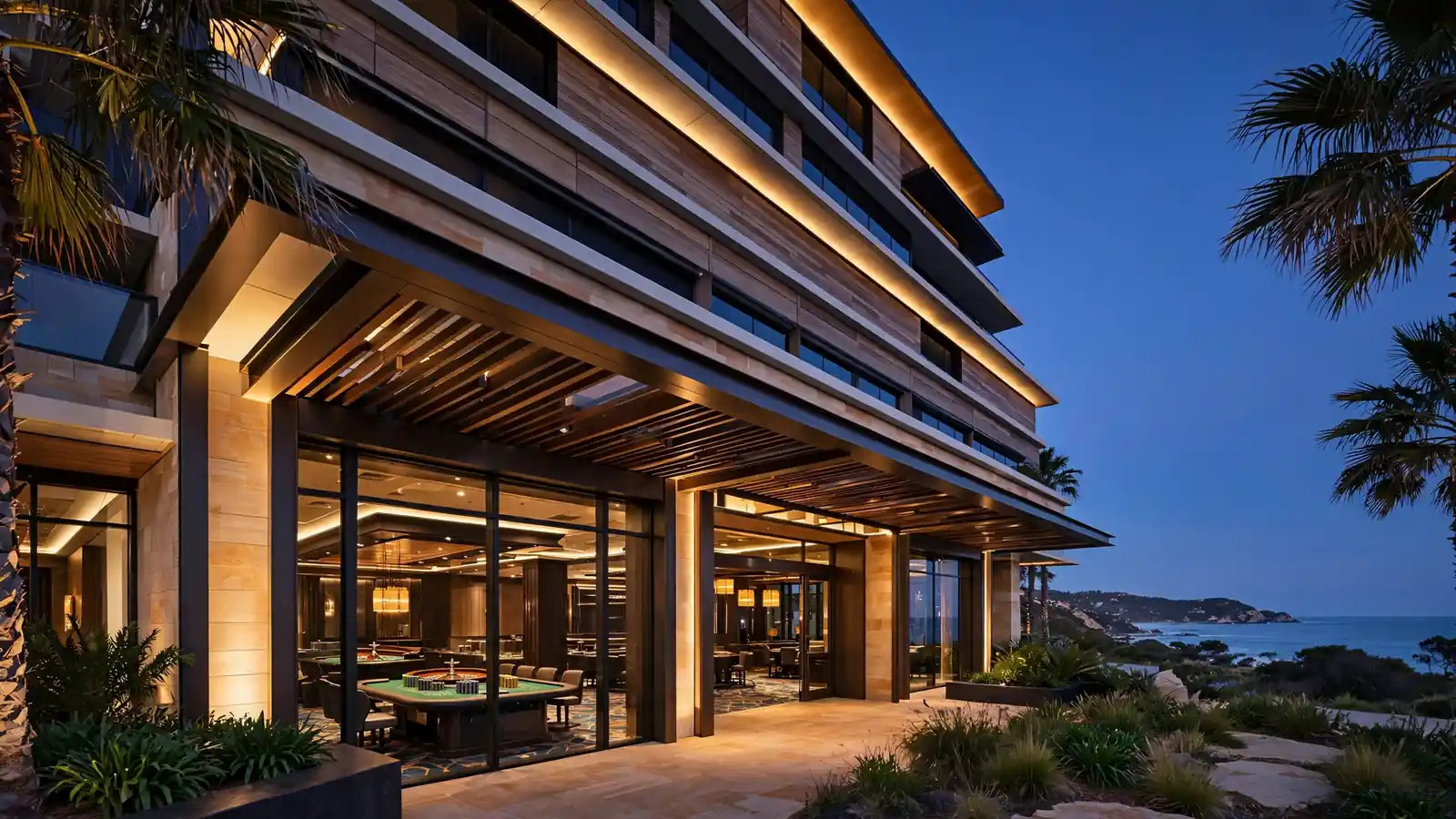
A casino hotel stay and a casino visit are related, but they are not the same booking decision. The room is accommodation; access to the gaming floor, dining and other facilities may have separate conditions and schedules. I keep those questions apart when comparing options. A room description can establish what is being sold as accommodation, but it does not by itself confirm which venue facilities are available during the stay.
That distinction matters when a listing uses broad language such as “casino resort”. The phrase can sound like a bundle of services, while the actual booking may cover only the room. I check the room category, occupancy terms, included services and cancellation conditions in the booking details rather than treating promotional wording as a promise. Read the small print. It does the work.
A “deal” is not automatically a lower-cost stay. It may attach conditions to the rate, such as restricted cancellation or a particular booking period. Before comparing prices, I look at the amount shown for the full stay and the terms attached to it. The headline rate is only useful when it is clear what it includes and what can change before arrival.
Choosing an online casino for Western Australia in 2026 calls for checking the details that matter to you, including licensing and payment information where available. This list offers a concise reference to the known details for each option.
LuckyVibe
LuckyVibe is listed with a Curacao Gaming Control Board licence, OGL/2023/176/0095, held by Hollycorn N.V.
GoldenCrown
GoldenCrown is listed with a Curacao Gaming Control Board licence, OGL/2023/176/0095, held by Hollycorn N.V.
Uptown Pokies
Uptown Pokies is listed as operating since 2017 under a Curacao licence. Its stated minimum deposit is A$20.
JustCasino
JustCasino is listed with a Curacao Gaming Control Board licence.
DragonSlots Casino
DragonSlots Casino is listed with a Curacao Gaming Authority licence, with Jumpman Gaming Ltd named in connection with it.
Vegaz Casino
Vegaz Casino is listed with Curacao licence OGL/2024/1335/0780. Its stated minimum deposit is EUR 20.
Roby Casino
Roby Casino is listed with a Curacao eGaming licence, with Roby Games Ltd named in connection with it.
Kingmaker
Kingmaker lists a minimum deposit of A$30. Its stated payout speed is about 90 minutes for crypto and 1–5 days for fiat.
Wild Tokyo
Wild Tokyo is listed with a Curacao licence and a minimum deposit of A$10. Its stated payout speed is 30–60 minutes for crypto and 1–5 days for fiat.
Thor Casino
Thor Casino is listed with a Curacao licence from Antillephone N.V., with Versus Odds B.V. named in connection with it. Its stated minimum deposit is EUR 20.
Room names also need careful reading. A view description, bed configuration or suite label is not a substitute for checking the room’s listed features. If a particular setup matters, it should be stated in the booking details, not inferred from a photograph or a broad category name. Images can represent a room type rather than the exact room assigned.
For a fair comparison, I use the same basics across each option: dates, number of guests, room category, cancellation terms and included services. If one listing has a flexible cancellation policy and another does not, the prices are not directly equivalent. The difference is not just cosmetic; it changes how much flexibility the booking provides.
Hotel arrival arrangements and casino opening hours are separate pieces of information. A hotel may have its own check-in and check-out rules, while a casino or another facility may follow a different schedule. A reservation confirmation should be checked for the accommodation’s arrival instructions; current venue information should be checked separately for access to other facilities.
I avoid assuming that a hotel booking grants automatic entry to every part of a property or that all facilities operate throughout a guest’s stay. Terms can differ by facility, and schedules can change. If the timing of a visit matters, the relevant current information should come from the venue’s own channels, not from an old listing or an abbreviated booking description.
 Fast payout online casinos in Australia: what to checkLearn how to separate an operator’s approval time from the transfer to your account, and why the payment route matters when comparing…
 Hobart Casino: Poker, Rooms and Visitor DetailsLearn how poker-room listings differ from tournament notices and accommodation searches. A venue name beside “poker” is not a schedule.
The same care applies to late arrival, parking arrangements and requests for a particular room. These are practical details, but a booking page may not settle them. Where a condition is important, written confirmation is more useful than relying on a general impression from promotional copy.
I would compare the stay in this order: the room and occupancy details; the full price and what it includes; the cancellation and change conditions; then arrival arrangements and any separate venue access information. That order prevents a glossy package description from doing the work of a clear booking term.
The phrase “casino hotel” tells very little about the room itself. It does not establish a particular rate, a specific room feature, or the current hours of a gaming venue. Those details belong to separate information sources and can change independently. A careful booking is therefore less about chasing the strongest label and more about matching the written terms to the stay being planned.
For anyone weighing a Western Australian casino hotel, the practical test is simple: the room offer should be understandable without guessing, and any facility or access expectation should be confirmed on its own terms. That is how a tempting headline becomes a booking that can actually be assessed.
A request for a poker room at a Western Australian casino is about a specific facility for live poker. It is not a request for a hotel room, and it does not establish that a venue runs poker games. Nor does the word “poker” necessarily mean card play: in Australian venue language, poker machines are Electronic Gaming Machines (EGMs), a separate form of gambling.
That distinction matters because a venue page can use broad gaming language without confirming a dedicated poker room, live tables or a tournament calendar. From the industry side, I learned to treat those as separate operational claims. A room requires a physical space and a defined use; a tournament additionally needs dates and conditions. One does not follow automatically from the other. Search wording is not a booking confirmation.
A tournament reference is useful only when it is tied to a named venue and current, specific information. The detail that matters is not promotional language such as “poker action” or “event night”, but whether the venue itself identifies a live poker tournament and states when it takes place. Without those particulars, the phrase could be stale, generic or refer to something other than a scheduled tournament.
I would also keep a tournament listing separate from a general statement that poker is played somewhere. A regular game, a one-off event and a formally scheduled tournament are not interchangeable. Terms can also describe online poker, which is a different subject from a physical casino room. Under the Interactive Gambling Act 2001, operators are prohibited from providing real-money online poker to people located in Australia. A phrase about poker at a venue should not be read as evidence that online play is offered or lawful through an Australian-based operator.
 Casino in Perth: Rooms, Rates and Dining GuideCompare Perth casino hotel rooms and rates, check booking terms, and explore dining, poker, facilities and transport details covered in this guide.
 Sydney Casino Guide: Hotels, Dining and Venue DetailsLearn how to distinguish casino-linked accommodation from nearby hotels, and why dining, amenities, NSW pokie rules and online access need separate checks.
“Poker available” is a broad label. The conditions are the real information.
The word “rooms” can point in two directions: accommodation within a casino property or a room for gaming. Those questions need separate answers. Hotel room details belong to a stay comparison; they do not tell anyone whether a poker room exists. Likewise, a mention of a sports bar does not confirm poker tables, tournaments or any particular gaming facility. Food and drink service and live poker are distinct offerings, even when they share a building.
Phrases such as “open now” or “open today” are especially poor evidence of poker availability. A venue may be open while a particular facility is not operating, and a general opening-status result does not establish that a poker event is scheduled. Current venue information is the relevant check for timing; a separate, explicit poker listing is needed for the game itself. I would not infer either from a map label or an old event reference.
There is a practical reason to be exact. A tournament may have entry conditions and timing that differ from ordinary play, while a general venue listing may say nothing about either. If responsible play is being assessed, the same discipline applies at the table: set a session budget based on the available bankroll and do not raise stakes to recover losses. Chasing changes the risk, not the odds.
Legal Restriction
Under the Interactive Gambling Act 2001, operators are prohibited from providing real-money online poker to people located in Australia.
For a Western Australian casino, the safe reading is narrow: a search for a poker room or tournament expresses an interest, not confirmation that a specific property offers one. Treat live poker, poker-machine play, accommodation, sports-bar service and online poker as separate categories. Only a current venue statement that names the facility or event can establish the first two; the category labels alone cannot.
A search for a casino in Western Australia can point to two different things: a physical venue or an online gambling service. They are not interchangeable. References to bingo, dining or parking belong to questions about an on-site venue; they do not establish that an online casino service is available or lawful in Australia.
For online play, the central distinction is where the operator is based and whom it serves. Under the Interactive Gambling Act, an operator based in Australia cannot provide online casino games to people in Australia. That restriction covers pokies, blackjack and roulette. An Australian-run website does not become permissible just because its games are accessed from a home computer or phone.
Offshore platforms sit in a different legal position, but that does not make them Australian-regulated services. Australian law prohibits operators from supplying real-money online casino games to people in the country, while the player is not criminally liable simply for using an offshore site. In practice, offshore access is subject to blocking and enforcement, and an overseas licence does not amount to local approval or protection. That distinction matters: “available online” is not the same as lawful provision in Australia.
An online operator or its game supplier can restrict access according to a player’s location. The system can use the IP address associated with a connection to estimate where it is being used. When that location is Australia, a restricted game may be omitted from the lobby altogether. The catalogue shown on screen is therefore not necessarily the full catalogue advertised elsewhere.
A game that appears in a platform’s promotional material may not load from an Australian connection. In some cases, the title is absent before a player selects it; in others, a loading failure can reflect a location restriction rather than a temporary fault. A specialist review has described this kind of failure as a possible region-blocking issue, but one report cannot establish the cause of every failed game. The distinction is practical. A technical-looking error does not prove that access is permitted.
Using a VPN to make a connection appear to come from another country does not change the legal position in Australia. It also breaches the terms of service of sites that prohibit bypassing location controls and may result in account suspension. The apparent location can change. The underlying restriction does not.
The phrase “best casino in Western Australia” can suggest a ranking, but an online list cannot turn an offshore service into a lawful Australian provider. Nor does a games menu confirm that every title can be accessed from Western Australia. For online casino games, the governing issue is not the promotional label or the size of the lobby; it is whether the service may lawfully be provided to people in Australia.
Attention An offshore licence does not amount to local approval or protection, and access to offshore sites is subject to blocking and enforcement.
I treat a displayed game list as a snapshot, not a promise of access. Location rules can apply at the operator level or at the software-provider level, and availability may differ by connection location. No workaround converts a prohibited service into a locally authorised one. That is the limit.
A hotel described as “near the casino” is not necessarily part of the casino, and a casino’s own accommodation is a different product again. That distinction matters when comparing a stay in Western Australia: the room provider, booking terms and services may belong to separate businesses. A shared location in a travel listing does not establish shared ownership or bundled benefits.
I have found it useful to separate the decision into two questions: where the accommodation is, and what the venue itself provides. A property’s proximity cannot be judged from its name or a promotional label alone. Confirm its street address on the accommodation provider’s own booking page, then check the route and travel arrangements using a current map. Do not infer a walking distance, transport connection or parking arrangement from the phrase “near the casino”.
The same care applies to “deals”. An accommodation offer may refer only to a room rate, while casino promotions may have separate eligibility rules and conditions. A search result or banner does not establish that a stay includes venue benefits. Before booking, read the terms attached to the specific offer and establish which business is responsible for the room, any extras, changes and cancellation. If the offer does not clearly say what is included, treat the inclusion as unconfirmed. Fine print matters.
A casino location is not a substitute for a confirmed accommodation address. Check the property’s own listing for the address and booking details, and verify the casino’s location independently through its official channels. This avoids a common mix-up: a map pin, nearby landmark or third-party listing can create an impression of connection that the booking terms do not support.
Opening times and trading hours also belong to the venue, not the hotel booking. They can be relevant to planning a visit, but they do not establish when a room can be checked into, when reception operates or what services are available to overnight guests. Confirm each detail with the business responsible for it. Separate questions, separate answers.
Parking deserves the same treatment. “Parking near the casino” could mean a hotel facility, public parking or another arrangement; the phrase alone confirms none of them. Check whether parking is offered by the accommodation provider, whether it needs to be arranged separately, and what terms apply. Do not assume a casino visit includes a parking entitlement or that nearby parking is available when required.
Gaming machines and poker machines are venue matters, not accommodation features. Their presence, access conditions or operating arrangements cannot be inferred from a hotel listing or a room deal. Keeping those subjects distinct prevents a travel page from being mistaken for a current guide to casino facilities.
For a practical comparison, record the accommodation’s exact address, booking provider, included services, cancellation terms and parking information. Then check casino location, promotions and operating details separately. This is less appealing than a single “package” label, but it shows what is actually being sold—and by whom.
A venue enquiry and an online-game question are different matters. A phone number, map pin or car-park instruction concerns a physical destination; a baccarat or craps page may refer to a game offered online, at a venue, or simply in promotional material. The wording alone does not establish which one applies.
For a Western Australian casino contact, the dependable route is the venue’s own current website or official listing. Third-party directories can retain old numbers, map pins and access notes after details change. I treat a map as a starting point, not confirmation: check that its listing matches the venue’s own information before relying on it for directions or parking. A search result is not a contact desk.
Baccarat and craps are table-game names, but their appearance on a page does not prove that a particular physical casino currently offers them. Nor does it establish opening times, table availability or rules. Those are venue-specific details and should be confirmed directly with the operator before making plans. The same applies to a bar, concert listing or car park: a result may be outdated, refer to another business, or describe a separate event.
Online access carries a different issue. Under Australia’s Interactive Gambling Act 2001, operators cannot provide real-money online casino games to people in Australia. That includes casino-style games such as baccarat and craps. An offshore site’s willingness to accept an account does not make its service an Australian-authorised casino, and offshore platforms are not regulated under Australian law. The practical position is not the same as choosing a local venue.
A game’s display can also depend on location and the provider’s rules. Operators or game suppliers may restrict access from Australia where their licensing conditions require it. A specialist review has also reported that some providers have blocked Australian access in anticipation of possible legal reform; that is a report about a changing practice, not a settled rule for every game. If a game fails to load, region blocking is one possible explanation, rather than proof that an account or device is faulty.
A direct venue enquiry can clarify physical matters: whether a listed game is available on site, where entry is located, how parking access works, or whether an event is actually scheduled. It cannot make an online casino service lawful in Australia. Keeping those questions separate avoids a common mix-up: a venue’s physical gaming information and an offshore website’s game lobby are not interchangeable.
I would also avoid treating a promotional page as a current operating notice. “Available” can mean listed in a catalogue, not accessible from an Australian location; “contact” can lead to a general support channel rather than a venue department. Confirm the subject of the enquiry and the channel’s purpose before relying on an answer. Small distinction. Big consequence.
Direct venue enquiries can clarify physical matters such as game availability, entry locations, and parking, but they cannot make an online casino service lawful in Australia.
Breakfast and buffet searches often compress several separate questions into one. A casino resort may be used to describe a property with accommodation and other facilities, but the label alone does not establish that breakfast is served, that it is included with a stay, or that a buffet operates. Those are separate details, and each can change independently.
I have learned not to treat a polished resort description as a service schedule. Breakfast might be offered through a particular outlet, tied to a booking, or unavailable on a given day; a buffet is a distinct format, not a synonym for breakfast. Before relying on either, the useful checks are the venue’s current dining information, the conditions attached to a room booking and any direct confirmation for the intended date. A search result or old promotional page can outlive the offer it describes. Small distinction. Real cost.
The same care applies to a casino buffet. The word can refer to a past promotion, a specific meal period or a service that has changed. It does not establish what is served, whether bookings are required, or whether the offer is operating now. Those details belong with the venue’s current information, not with assumptions drawn from the word “resort”.
A casino rewards programme can sound like a straightforward exchange: activity earns points, points unlock benefits. The actual value depends on the programme’s current rules, including what activity counts, how points are calculated, how they can be used and whether they expire. None of those conditions follows from the word “rewards”.
I would read the terms before assigning a dollar value to points or treating a perk as a discount. A benefit can be conditional, and the spending needed to qualify is still spending. Rewards should not be used as a reason to increase bets or chase losses. A session budget based on available bankroll is a firmer boundary than a points target; losses should not be pursued in the hope of recovering them. No loyalty label changes that arithmetic.
Venue loyalty schemes should also be kept separate from online casino promotions. Australian law prohibits operators from providing real-money online casino games to people located in Australia. A points offer or promotional message does not alter that boundary.
“Casino jobs” can mean very different roles, from hospitality and administration to gaming-floor work. A vacancy phrase is not evidence that a position is open, and an old listing may remain visible after recruitment has ended. The dependable details are the employer named on the listing, the role description, location, eligibility conditions and application route. Those should match the employer’s current careers information.
I would be wary of a page that asks for personal documents or payment before identifying the employer and the job clearly. A legitimate-looking venue name is not enough on its own; the listing needs to be traceable to the organisation doing the hiring. No vacancy should be inferred from a general page about a resort or casino.
Verifying Vacancies
Identify the Employer
Ensure the listing clearly names the employer and is traceable to the organisation doing the hiring.
Check the Role
Verify the role description, location, and eligibility conditions.
Confirm the Route
Match the application route with the employer's current official careers information.
Breakfast, buffet service, rewards and recruitment all sit under the same broad venue label, but they are separate operational matters. Check each on its own terms. The label does not do the checking.
A result saying that a casino is “open” can answer less than it appears to. It may refer to a venue’s general operating status, a particular service, or a page that has not been updated. I have seen how easily a broad label gets carried forward after the detail behind it changes. Open, in practice, needs a date and a specific facility.
For a visit, the useful check is the venue’s own current notice, matched to the intended date and activity. General opening information does not establish that an event space, entertainment programme or other part of the property is operating at the same time. A dated notice is stronger than a search-result summary; an old event listing is not evidence of a new schedule. Small distinction. Important one.
“Reopening” can also refer to different things: a venue resuming operations, a specific facility returning, or an announced plan that has not yet taken effect. Those are not interchangeable. A development announcement is not proof that work is complete, that a facility is available, or that an opening date remains current. The wording of the announcement matters: proposed, underway and operating describe different stages.
Event information has the same problem. A past performance or promotion can remain visible after its date has passed, while a general entertainment page may describe an offering without confirming what is scheduled now. The practical test is whether the listing identifies a current date and venue, and whether a recent venue notice supports it. Without that, the listing is background, not a plan.
Employment references should be read separately from venue-opening information. A casino-related job page, old vacancy or development report does not confirm that a role is currently available. A live listing needs a current status and an application route that still works. Development language can signal a proposal or investment discussion, not a hiring decision.
Reviews are useful for describing someone’s past experience, but not for establishing today’s hours, events or operating status. A review can stay online long after the conditions it describes have changed. I treat it as a record of one visit, not a live notice. The same applies when a result mentions a menu: that belongs to a specific service and date, rather than proving that the whole venue is open.
These checks concern a physical venue. They should not be confused with access to online casino games: under Australia’s Interactive Gambling Act 2001, operators cannot provide real-money online casino games to people in Australia. A venue’s event calendar says nothing about the legality or availability of online gambling.
For “best casino in Western Australia 2026,” current status is only one part of a sound comparison. Dated venue information can confirm what is happening; search snippets and undated claims cannot do that job.
"Open" may refer to general operating status or a specific service. "Reopening" can describe a venue resuming operations, a specific facility returning, or an announced plan that has not yet taken effect.
A restaurant inside a casino is a separate service from the gaming floor, and its name alone says little about what is available on a particular date. In comparing a Western Australian casino restaurant, the useful details are the ones tied to the meal itself: whether the venue is operating, what kind of food it serves, when its kitchen takes orders and whether a booking is needed. Those details should be checked against information issued by the venue, not inferred from a general description of the casino.
I have seen how easily a polished listing can outlast the arrangements it describes. A restaurant may be named without its current menu being shown; a menu may remain online after service times have changed. “Dining options” is an umbrella phrase, not a promise that every listed service is running when a visit is planned. The practical distinction is simple. A venue name establishes a label; it does not establish current availability.
The same care applies when several restaurants are presented together. A list does not tell how far apart they are, whether they share service hours or whether each is open to the public on the same terms. Nor does the word “casino” establish that every dining venue is inside the casino rather than elsewhere on a broader property. The relationship between restaurant and venue needs to be explicit in the current information.
A restaurant description also cannot settle questions about menus, dietary options, prices or booking conditions unless those particulars are stated. These are not minor extras. They determine whether a place fits the occasion and whether the plan works. When a detail is absent, treating it as confirmed because it sounds customary is how small assumptions become a wasted trip.
Rooftop dining is another phrase that needs precise wording. It may describe a setting, a bar, or a restaurant, and those are not interchangeable. A mention of a rooftop bar does not by itself establish that food is served there, while a restaurant listing does not establish a rooftop location. The venue’s own description should connect the feature to the actual dining service.
For a casino in Western Australia, the reliable approach is to treat restaurant names as a starting point and verify the specific service being considered close to the intended visit. Look for a current venue page that identifies the restaurant and states its menu and service details. If those particulars cannot be established, the sensible conclusion is not that they exist by default. It is that the dining plan still needs confirmation.
No brochure language can substitute for that check. “Variety” sounds generous; what matters is which restaurant is operating and what it is serving. Details first. Then the booking.
An address is the first detail to settle before planning a visit, but a map pin and a venue name are not the same thing as a confirmed location. Listings can be copied, left unchanged or attached to the wrong business. I treat the casino’s own current contact channels as the place to verify the street address and entrance details, then check that the information matches the intended venue. A polished directory page is not enough.
Attention Directory pages and map pins can be outdated or incorrect; always verify street addresses and entrance details via the casino's own current contact channels.
Bars need the same care. A reference to casino bars does not establish how many there are, what they serve, whether they are open on a particular day or whether entry is subject to venue conditions. Those details can change independently. When a bar is part of the reason for a visit, its current status is a separate point to confirm—not something to infer from a broad venue description.
Dress codes are easy to misread because they can apply to a particular area or occasion rather than the entire property. A phrase such as “smart casual” can sound definitive while leaving practical questions unanswered: footwear, sportswear, special events and access rules may be treated differently. I would rely on the venue’s current policy for the specific space being visited, rather than general advice repeated across third-party listings. Small wording differences matter at the door.
The same distinction applies to a day spa. A casino-branded spa may appear in older pages, travel listings or promotional material, but that does not establish that a facility currently operates there or that treatments can be booked. “Spa” can also describe an off-site business in the surrounding area. The name alone does not settle location, access or availability. Check that the facility is part of the venue and that its own details are current before making plans.
Careers searches are another category altogether: a result may point to a general employer page, an old vacancy or a role with a separate business. It should not be read as evidence of a current opening. The hiring organisation and status of a listing need confirmation through its official recruitment channel.
When I see “casino games” used as a broad description, I separate physical venue information from online play. Under Australia’s Interactive Gambling Act 2001, operators cannot provide real-money online casino games to people in Australia. A venue-related phrase does not change that rule or confirm what facilities are on site.
The practical test is simple: confirm the exact venue, the specific facility and the current terms from an official channel. Search snippets are leads, not operating details.
Food-court facilities and swimming pools are separate questions from restaurants, bars or accommodation. A search result that places a casino name beside “food court” or “pool” does not establish that either amenity is on site, open to visitors or available to every guest. The wording can reflect an assumption, an old listing or a nearby business rather than a current venue facility.
I have found that amenity labels do a lot of work in hospitality marketing. “Resort” can suggest a pool; “casino dining” can suggest several casual options. Neither phrase is a floor plan. The practical detail is whether the facility belongs to the casino, operates at the relevant time and has conditions such as guest access or booking requirements. Those points need confirmation from the venue itself before they shape a travel plan.
Keep the categories distinct. A food court is a shared area with multiple food outlets; it is not simply another name for a restaurant. A pool may be part of a hotel or leisure complex rather than the casino’s public facilities. Even when a property offers one, access could be tied to a particular service or stay. Assumptions travel faster than the details.
There is also a difference between food available somewhere on a larger property and a dedicated food-court space. Venue maps, current facility pages and direct enquiries can clarify that distinction. For a pool, the useful checks are location, access conditions and whether the facility is operating on the dates planned. A photograph or third-party listing alone may not answer those points.
A search phrase is a lead, not confirmation. Until the venue identifies the facility and its access terms, treat food-court and pool references as unconfirmed—not as promised features of a Western Australian casino. Short version: verify the amenity itself.
Yes. Under the Interactive Gambling Act, Australian-based operators are prohibited from offering online casino games such as pokies, blackjack and roulette to people in Australia.
Australian players are not technically breaking the law by using offshore online casinos, but those platforms are not regulated under Australian law. Australian-run operators are prohibited from offering online casino games to players in Australia.
You must be 18 or older to play poker machines in NSW.
Examples include NetEnt progressive jackpot games Mega Fortune and Hall of Gods, and NYX Gaming/Next Gen games such as Foxin’ Wins and Doctor Love. Geo-blocked games may be hidden from the lobby or fail to load when accessed from an Australian IP address.
NSW uses mandatory pre-commitment systems, which require players to set a loss limit before playing.