The guide distinguishes verifiable information about accommodation and amenities from listings, promotional claims and online gambling references.
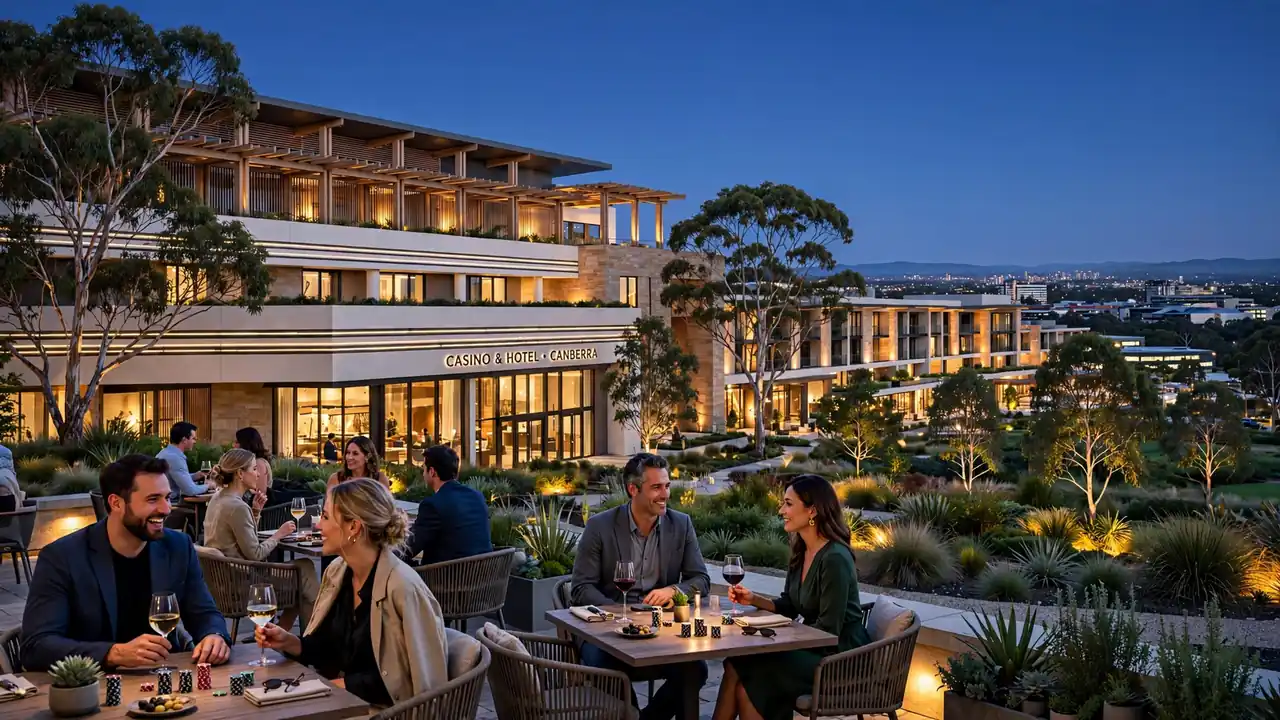
A casino and a hotel are separate businesses, even when they share a building or a brand. The phrase “casino hotel” can suggest that guests can book a room on site, but the wording alone does not establish that such rooms exist. I would not treat a hotel listing, a booking-site category or a promotional headline as proof of a room inventory connected to a Canberra casino.
That distinction matters when comparing a stay with a casino visit. A genuine on-site room offer should identify the accommodation provider, the property, the room type and the terms that apply to the dates being considered.
“Deal” is even less precise. It may refer to a discounted room, a bundle with another service, a loyalty offer or simply a headline designed to attract attention. Those are not interchangeable. A usable offer needs to specify what is included, the booking conditions, any dates when it cannot be used and whether the price changes with the stay. If the terms are not visible, the word “deal” carries little practical information.
Choosing an online casino from Canberra means weighing what is known about its licensing and practical details before signing up. This list offers a concise reference to the available information for each operator.
LuckyVibe
LuckyVibe is listed with a Curacao Gaming Control Board licence, OGL/2023/176/0095, held by Hollycorn N.V.
GoldenCrown
GoldenCrown is listed with a Curacao Gaming Control Board licence, OGL/2023/176/0095, held by Hollycorn N.V.
Uptown Pokies
Uptown Pokies has operated since 2017 under a Curacao licence. Its minimum deposit is A$20.
JustCasino
JustCasino is listed with a Curacao Gaming Control Board licence.
DragonSlots Casino
DragonSlots Casino is listed with a Curacao Gaming Authority licence under Jumpman Gaming Ltd.
Vegaz Casino
Vegaz Casino is listed with Curacao licence OGL/2024/1335/0780. Its minimum deposit is EUR 20.
Roby Casino
Roby Casino is listed with a Curacao eGaming licence under Roby Games Ltd.
Kingmaker
Kingmaker lists crypto payouts at around 90 minutes and fiat payouts at 1–5 days. Its minimum deposit is A$30.
Wild Tokyo
Wild Tokyo is listed with a Curacao licence. It lists crypto payouts at 30–60 minutes, fiat payouts at 1–5 days, and a minimum deposit of A$10.
Thor Casino
Thor Casino is listed with a Curacao licence from Antillephone N.V. (Versus Odds B.V.). Its minimum deposit is EUR 20.
I have seen how those labels work from the business side: the headline does the selling, while the conditions determine what is actually being sold. A room price might be tied to a particular date or room category; a package might have exclusions that matter more than its name. None of that can be assumed for Canberra. A rate should be treated as real only when it appears in a current booking channel with clear property and offer terms.
The same care applies to claims that a hotel is “near” a casino. That description does not tell a guest whether the property is part of the venue, independently operated, or simply located in the wider area. Those distinctions affect where a booking is made and who is responsible for the reservation. They should be clear before any payment or travel arrangements are made.
Opening times are a separate matter. A casino’s operating hours, even if confirmed, would not establish that it runs a hotel, offers overnight stays or sells accommodation packages. Nor does a room listing establish when the casino is open. These are different services, and each needs its own current confirmation.
For a practical check, the essential details are the name of the accommodation provider, the exact property being booked, the room and rate conditions, and the channel responsible for the reservation. A casino-branded promotion should also make clear whether the casino itself is the seller or whether another business handles the stay. If those points are unclear, the offer is not specific enough to rely on.
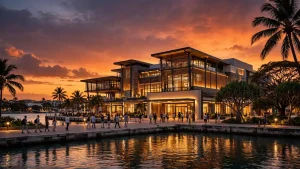 Darwin Casino: Facilities, Stays and Details to VerifyReview what can be verified about Darwin Casino, including stays, dining, games, online access and claims about facilities or rewards.
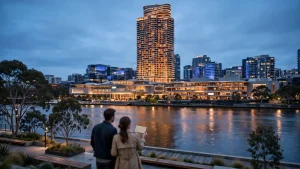 Best Casino in Melbourne: What Searches ConfirmSeparate nearby rooms from casino hotels and check what searches actually verify about parking, dining, opening hours, rewards and access.
So, “Canberra casino hotel” is best treated as a description that needs proof, not as confirmation of an on-site hotel. Check the property and its terms directly before making a reservation. No assumptions.
A search for poker at Canberra Casino can mean two different things: a room set up for live play, or a tournament listed for a particular date. Neither can be inferred from the other. A venue might host occasional events without maintaining a dedicated poker room; a room might exist without a public tournament calendar. The distinction matters before making a trip.
I would treat claims about a poker room as a facility question, not a promise of a game. A current confirmation needs to establish that live poker is actually available, whether it runs routinely or only on selected occasions, and whether entry is open to visitors. A photograph, an old directory entry or a general casino description does not settle those points. Conditions change. The practical answer needs a current date attached to it.
Tournament information needs the same discipline. A useful listing should identify the event date, registration arrangements, format and any entry conditions, rather than simply say that tournaments are held. If the listing is undated, it may describe a past event. If it gives no registration details, it may be an announcement rather than a playable schedule. Marketing language such as “action” is not an event specification.
I have seen how a short promotional line can do a lot of work while leaving the operational details out. “Poker tournament” sounds definite, but the player still needs to know whether the event is confirmed, whether registration is open and whether the terms have changed. Those are not minor footnotes. They determine whether the advertised opportunity is usable.
Before relying on a listing, confirm it through a current venue channel and ask specifically about the date and format. For a room, ask whether live tables are operating on the day in question and whether access is restricted by an event or other condition. For a tournament, ask whether it is scheduled to proceed and how registration is handled. A dated response is more useful than a copied calendar entry.
There is also a difference between “poker available” and “poker available now.” A standing page can remain online when a session has been cancelled, paused or moved. Likewise, an event announcement may not mean that seats remain available. The wording can be technically accurate and still leave the most important point unresolved. Check the current status, not just the headline.
For Canberra Casino rooms, it is worth keeping the phrase “rooms” in context: it may refer to poker facilities, but it can also be read as a hotel search. A hotel-room result does not confirm a poker room, and a poker reference does not establish accommodation. They are separate questions and need separate confirmation.
If no current details can be confirmed, the sensible conclusion is limited: the availability of live poker, a dedicated room and tournaments on a chosen date remains uncertain. That is not evidence that the venue has no poker; it is a reason not to plan around an unverified schedule. Keep the distinction clear. No assumed tables. No assumed tournament.
A search for baccarat, a bar or concerts can make a casino sound like a settled package: gaming floor, drinks and a programme of live events. In practice, those are separate operating decisions. A venue may have one without the others, and a name attached to a casino listing does not establish what is currently available. I learned to treat the wording of a promotion as a prompt to check the underlying service, not as a complete description.
Baccarat is a table game, but that label alone says little about the format, operating times or whether a table is open on a particular visit. The same applies to craps. A general games page, an old photograph or a third-party directory may describe a venue at another point in time. Current details need to come from an official channel, with the precise game and session confirmed rather than inferred from a broad reference to table games.
That distinction matters because “available” can mean several things behind the counter. A game may be listed but not running at the time someone arrives; a venue may have changed its offer; or a page may remain online after its details have gone stale. The practical question is not only whether baccarat or craps appears in a description, but whether the game is operating when intended and what conditions apply. No assumption should be built on a label alone.
Labels like "available" can be misleading; a game may be listed on a page but not running at the time of arrival, or the venue may have changed its offer.
A bar is another separate facility, not an automatic feature of every casino. The word can refer to a dedicated bar, a drinks service within another area, or simply promotional language. Before making plans around it, the useful checks are whether a bar is operating, its service hours, entry conditions and whether access depends on another booking or event. Those details can change independently of the gaming offer. Small print matters.
Concerts and other entertainment require the same care. A past event listing demonstrates, at most, that an event was advertised at some time; it does not establish a continuing programme or a future performance. Dates, ticket arrangements, age restrictions and entry rules belong to the individual event notice. A general venue page may not carry the latest changes. I would look for a current announcement from the venue or the event organiser, then confirm any conditions attached to entry.
Contact details and maps are useful only when they point to an official, current source. Search results can preserve old phone numbers, copied listings and map pins that have not kept pace with changes. When a call is needed, an official venue page is a better starting point than an unverified directory entry. The same goes for a map: confirm that it identifies the intended venue before relying on it for arrangements. I would not treat a result-page snippet as confirmation.
There is a difference between a casino’s general identity and the specific service being sought. Baccarat, craps, drinks and live entertainment each require their own current confirmation; one does not prove the others. A polished phrase such as “complete entertainment” is still an advertising description until its components are clear. Check the detail. Then make the plan.
Parking and bingo are practical venue questions, but neither should be treated as confirmed simply because it appears in a listing or an old promotion. Details such as whether parking is available, whether it is free, whether valet service operates and whether bingo is scheduled can change. I have learned to separate an advertised feature from an operating one: the useful detail is the current arrangement, not a stale label.
Before travelling to a Canberra casino, confirm parking arrangements and any bingo session directly with the venue. Ask whether the information applies on the intended day and whether conditions differ for visitors. A listing that mentions parking does not establish that spaces will be available or that they are complimentary; the same goes for valet service. Bingo should be checked as a specific activity, rather than assumed to be part of the casino’s regular programme. Small distinction. Important one.
The same discipline applies to “online” offers associated with a physical casino. A Canberra venue and an online gambling service are not interchangeable. The rules for real-money casino games depend on where the operator is based and where the customer is located. Under the Interactive Gambling Act, an Australian-run operator cannot provide online casino games to people in Australia. That restriction covers games such as pokies, blackjack and roulette; it is not a statement about parking, bingo or other services at a physical venue.
Legal Restriction
Under the Interactive Gambling Act, Australian-run operators cannot lawfully provide real-money online casino games to people located in Australia.
Offshore websites sit in a different legal position, but that does not make them locally regulated alternatives. Australian players are technically not prohibited from using them, while the platforms themselves are not regulated under Australian law. The distinction matters: a site accepting Australian customers is not thereby authorised or supervised as an Australian online casino. Nor does the presence of a familiar brand name establish that an online service is operated by the Canberra venue.
I would not treat a website’s availability as proof of approval. The legal position concerns the operator’s service to people in Australia, not just what appears on a screen or how a site describes itself. Australian-based operators cannot lawfully offer real-money online casino games here; offshore operators are outside Australian regulation. Those are separate points, and neither should be softened into a general claim that every online casino is a locally licensed option.
For a visit, keep the checks narrow and concrete: confirm the venue’s current parking arrangements, whether valet parking is operating, and whether bingo is actually scheduled. For online play, do not confuse offshore access with Australian regulatory oversight. The two questions have different answers. One concerns what is operating at a particular venue; the other concerns restrictions on online casino services under Australian law.
A stay near a casino and a room inside one are different arrangements. That distinction matters in Canberra, where a search for nearby accommodation can return listings that use the venue as a reference point without establishing that the property is operated by, connected with, or within walking distance of it. I would treat “near” as a claim to check, not a measurement.
The first practical step is to confirm the casino’s location through a current, reliable venue contact or listing, then compare accommodation addresses against it. Until that starting point is clear, map distances are not useful. A hotel’s pin may mark its reception, a broader property boundary or an approximate location; route distance can also differ from straight-line distance. The distinction is simple. The route is what counts.
For a Canberra stay, the best base depends on the purpose of the trip as well as the casino visit. A property close to the venue may not suit a traveller whose other plans are elsewhere, while a central location can make more sense if the casino is only one stop. I would compare the actual address, transport options and late-night return arrangements before treating any listing as the convenient choice. A promotional description cannot settle those details.
“Casino accommodation deal” is an especially loose label. It might describe a room offered by an independent hotel, a package involving a separate service, or simply a search result placed beside casino information. The wording alone does not prove a partnership, a room benefit or a saving. In my experience, the useful question is not whether the word “deal” appears, but what is included, who supplies it and what conditions apply.
That means checking the booking terms before payment: whether the price covers the room only, whether taxes or other charges are stated, what the cancellation rules say, and whether any advertised benefit is actually attached to the reservation. Those are general booking checks, not claims about a particular Canberra property. If a booking page does not name the provider or explain the package, the offer is not clear enough to compare.
I would also keep accommodation decisions separate from assumptions about the casino’s own facilities. A nearby hotel listing does not establish that the venue has rooms, and a hotel’s casino-related wording does not confirm gaming access, opening times or other on-site services. Those are separate matters and need confirmation from the relevant business.
For a dependable comparison, use the same dates and room requirements across accommodation listings, then check the property’s own terms and location details. Prices can change with dates and availability, so an old promotional result is not a reliable quote. Nor does a map result establish that a property is available for the intended stay.
The practical conclusion is modest: choose accommodation on verified location and booking terms, not on the assumption that “near the casino” means a particular distance or that a casino-labelled package is official. For Canberra, those details need to be established directly with the accommodation provider before travel.
A breakfast label can describe several different arrangements: a meal included with accommodation, a separately priced menu, or a buffet served during a particular period. Those distinctions matter because a headline can make a package sound broader than its actual terms. Without a current, venue-specific offer, none of these formats should be treated as an available feature of Canberra’s casino.
The same applies to a buffet breakfast. The word “buffet” describes a style of service, not its location, operating days, menu, price or eligibility. A result that combines the casino with “resort” language does not establish that a breakfast package is offered there, or that any meal is included in a room rate. Each element would need to be confirmed in the same current booking or offer terms. Otherwise, the wording is only a label.
I have seen how package language can compress several conditions into a short promotion. “Included” may depend on the booking selected; “breakfast” may refer to a set menu rather than a buffet; and an offer may apply only on specified dates. The headline is not the contract. The conditions are.
Casino rewards need the same careful reading. A search for a rewards programme does not establish that one exists at a particular venue, nor that points, member pricing, complimentary meals or other benefits are available. A rewards label, where one is genuinely offered, can cover quite different arrangements. The useful details would be how membership works, which purchases qualify, how benefits are redeemed and whether exclusions apply. Without those terms, assigning value to a supposed reward is guesswork.
“Resort” can also create an impression of a bundled experience: accommodation, dining and leisure under one brand. The word alone does not confirm any of those services, or a connection between them and a casino. That is why a resort-style phrase should not be used as evidence of a breakfast deal or casino rewards scheme. Separate claims require separate confirmation.
For any meal promotion, the practical checks are straightforward: identify the named venue, the service period, what the price covers, whether booking is required and which conditions apply. For rewards, the equivalent checks are eligibility, qualifying spend, expiry or redemption rules, and exclusions. If the terms cannot be found, the offer should not be counted as part of the visit’s value.
This is not a minor distinction. A traveller may choose dates, accommodation or a meal around a promised inclusion. A vague promotional phrase cannot settle those decisions. Confirming those details directly before making plans is more reliable than treating a search result or an old promotion as current. No assumed extras.
“Open” can mean a venue is operating, a particular area is accessible, or a scheduled event is going ahead. Those are separate checks, not interchangeable claims. I would not treat an old listing or an undated page as confirmation of the casino’s current status. Hours can change, and a venue-wide notice may not answer whether a specific service is available.
The same caution applies to searches about a reopening. The wording alone does not establish that the casino has closed, is due to reopen, or has announced a date. A reopening claim needs a current statement from the venue or another responsible source, with the date and scope made clear. Without that, it is more accurate to say the status has not been established than to turn a search phrase into news.
Event information has its own short shelf life. A listing can be cancelled, rescheduled or removed, while an old event page may remain visible after the date has passed. Before making plans around an advertised appearance or function, the relevant details need direct confirmation. A general events page is not proof that a specific event is still proceeding. Small distinction. Practical consequence.
Development claims need similar discipline. A proposal, discussion or application is not the same thing as approved work, construction or a completed upgrade. The wording matters because each describes a different stage. Unless a current, attributable announcement identifies what is happening and when, there is no sound basis for presenting a Canberra casino development as confirmed.
Employment searches also require a dated source. A past vacancy does not establish that recruitment is open now, and a general careers page does not confirm a particular role is available. Job title, location and application status can change independently. I would treat a vacancy as current only when the employer’s own information supports that reading.
A review has limits, too. It records someone’s assessment at a particular time; it cannot verify today’s hours, future plans or whether an event is still on. Nor does an old review establish the present operating status. These are operational details, and they need current confirmation rather than inference from commentary.
The broader legal setting is clearer than any Canberra-specific opening or development claim: under the Interactive Gambling Act 2001, operators cannot provide real-money online casino games to people physically in Australia. That rule concerns online services. It does not establish the opening status, event calendar, development plans or employment situation of a physical Canberra venue.
For those details, the useful standard is simple: look for a current notice from the venue or the organisation responsible, check its date, and confirm that it refers to the relevant service or event. Until then, neither “reopening” nor “open now” is a verified answer.
An address is the detail that turns a plan into a journey, so it should be confirmed against a current, official venue listing before travel is arranged. A map result or an old directory entry can remain visible after details change; neither alone establishes that a casino is operating at that location. I treat the name and street address as a pair, not as interchangeable clues. If they do not match across current official information, the sensible decision is to pause rather than guess.
The same discipline applies to dress expectations. A broad label such as “smart casual” sounds useful, but its meaning depends on the venue and the area being visited. Entry conditions can also differ by occasion or service. I would not infer a dress code from photographs, old event coverage or another casino’s policy. The relevant rule is the one the venue currently publishes or confirms for the intended visit. Small detail. Real consequence.
Spa searches need even more care because the word can refer to anything from a treatment service to a pool or wellness facility. A search result that associates a spa with a casino does not establish that the casino operates one, that it is on site, or that it is open to general visitors. Before building a day around treatments or facilities, obtain direct confirmation of what is offered, where it is located and whether access requires a separate booking. Without that confirmation, the spa should not be treated as part of the visit.
Bars, games and careers are similarly venue-specific matters, not details that can be inferred from the casino label. A bar listing does not establish current trading arrangements; a games reference does not confirm which options are available on site. Employment information should come from a current vacancy notice or the organisation’s own recruitment channel, rather than an old listing that may no longer be active. These are separate checks, each with its own source of truth.
In practical terms, a reliable arrival plan starts with a current address and a direct confirmation of entry expectations. Any optional amenity needs its own confirmation. I have seen how easily a confident listing can outlive the detail it once described. That is not a small distinction when someone is travelling across town or arranging a special visit. No assumption should substitute for a current answer from the venue.
A restaurant associated with a casino can mean several different things: a dining room inside the gaming venue, a separate business on the same site, or a nearby restaurant included in a general listing. Those distinctions matter. A map pin or directory entry can place a business close to a casino without establishing that it is operated by the venue or located within it.
I learned to treat “at the casino” as a claim about location, not as a loose description of the surrounding area. The same applies to a Canberra casino restaurant listing: the name alone does not tell anyone who runs the business, whether it is on site, or whether the listing is current. A direct venue channel and a restaurant’s own current information are more useful than a third-party page that gives no clear date or address.
The detail behind the label matters. Menus can change, service can be limited to particular periods, and a venue may alter its arrangements. An old photograph or menu is not proof of what is available now. Before making plans around a particular dish, booking option or service time, it is sensible to confirm that detail directly with the business. That is basic diligence, not a claim that any particular restaurant or arrangement exists.
Rooftop dining deserves the same care. A search result combining “casino” and “rooftop bar” may refer to a nearby venue, an old listing or a business with no connection to the casino. A rooftop label says nothing by itself about the view, food service, access arrangements or whether the place is part of the casino. Treating those details as settled can turn a simple dinner plan into a wasted trip.
I would separate three checks: the business’s exact name, its precise location, and its current food-service information. If the venue itself confirms a restaurant, the next practical details are its menu, service times and reservation process. If a listing points elsewhere, it should be assessed as a separate business rather than folded into the casino’s facilities.
That distinction keeps “casino restaurant” from doing more work than it should. It may describe an actual on-site dining option, or merely a restaurant in the same part of Canberra. Names and proximity are not the same as confirmation. For this topic, precision beats atmosphere.
A food court and a pool are specific facilities, not details that can be inferred from a casino’s name or from the fact that it is a leisure venue. I treat each as a separate claim. A reference to food does not establish a food court, and a hotel-style image does not establish that a pool is available to casino visitors.
For Canberra, neither a food court nor a pool can be confirmed as an on-site facility. That leaves a practical distinction: general food availability, if mentioned elsewhere, would not prove a dedicated court with multiple counters or shared seating. Likewise, a pool associated with nearby accommodation would not automatically be part of the casino or open to its patrons. Different arrangements, different access.
This matters when planning around a particular amenity. A venue directory, current official listing or direct confirmation from the operator is more useful than a short description copied between business listings. The detail to establish is not merely whether food or a pool appears somewhere in promotional material, but whether the facility is at the casino, operating, and accessible under the intended circumstances. No assumption should fill that gap.
The same caution applies to photographs. Images can be dated, show another property, or depict a facility with restricted access. They are not a substitute for a clear current description.
The search for casino food in Canberra can therefore lead to a misleadingly broad answer: food nearby, food elsewhere in a complex, and a casino-operated food court are not interchangeable. A pool is even less safe to infer from general venue imagery. Until the operator identifies either amenity as part of the venue, neither should be treated as an on-site feature.
Small distinction. Big inconvenience.