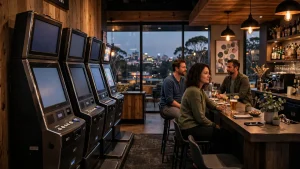
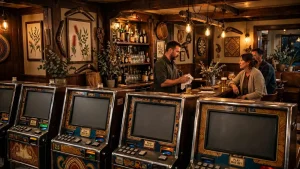
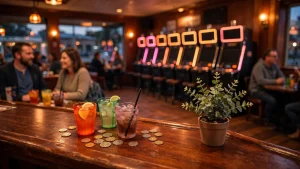
A listing can show stated trading hours, but it does not establish that the gaming area is accessible or machines are operating.
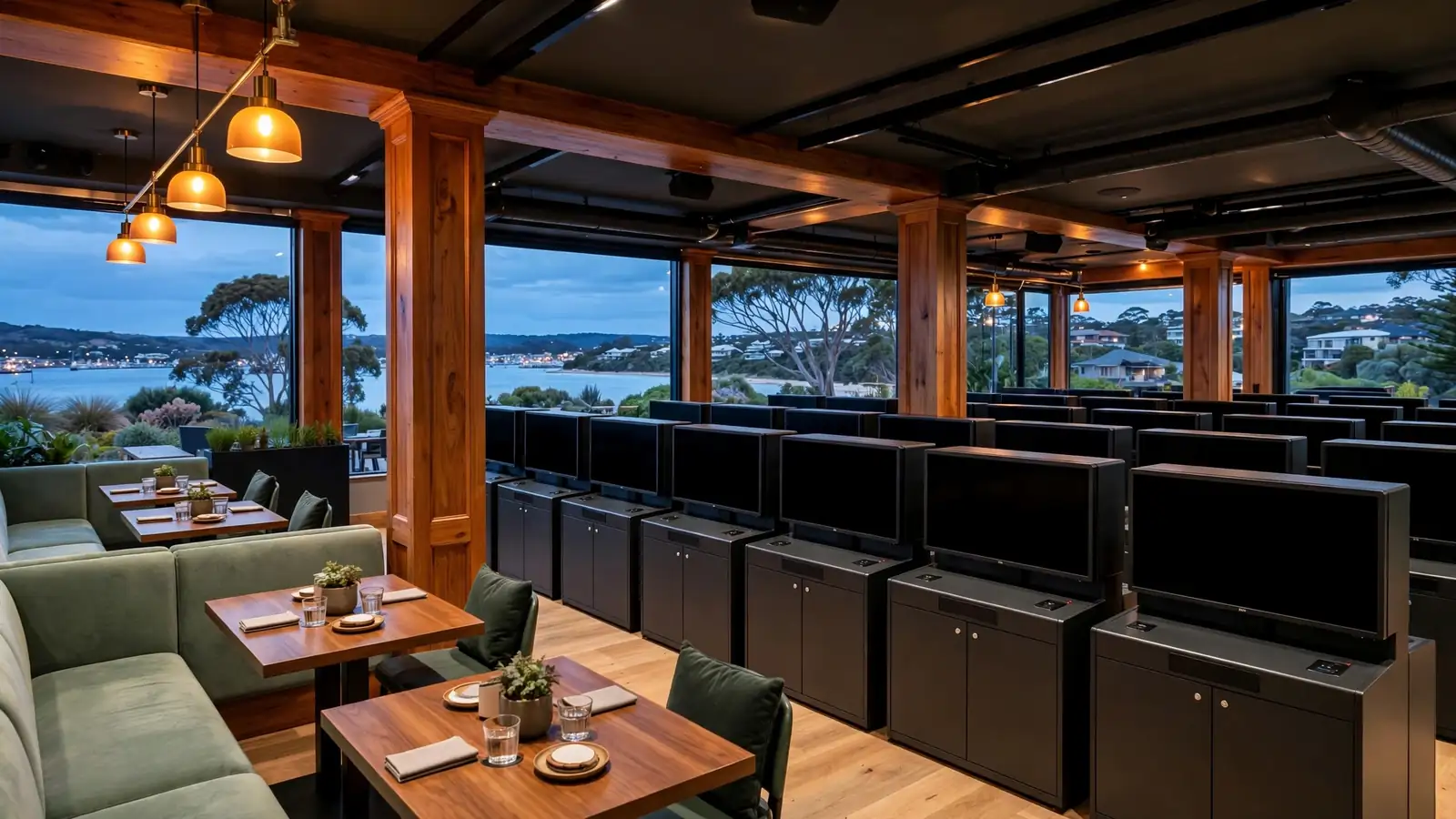
An “open now” label is a useful lead, not confirmation that pokies are available at a particular venue. It may reflect hours entered in a business listing, while the venue’s circumstances have changed since those details were updated. A search result can look precise and still be out of date.
I learned to separate three questions that listings often compress into one: is the venue open, is the relevant part of it accessible, and are the gaming machines operating? A venue’s general trading hours do not necessarily answer every question about access. Nor does a result marked open establish that a particular service is available at that moment. The label is only as dependable as the information behind it.
Business profiles, map listings and directory pages can help identify a venue’s stated hours. They are not all maintained in the same way. Some details may be supplied by the business; others can be carried across from older listings or changed without a clear indication of when the information was checked. A page remaining visible does not prove that its hours remain current.
Look for an update or confirmation from the venue itself, and give more weight to information published through its own current channels than to an undated directory entry. Even then, a published schedule describes the expected pattern, not necessarily what is happening at the time of reading. Temporary changes, private functions or other day-to-day circumstances may not appear immediately in a profile.
The distinction matters when a search is made late, early or around a public holiday. A general schedule may not describe a special day, and a search engine may not make the age or origin of its hours obvious. “Open now” can therefore be a summary of stored information rather than a live report from the premises. That is the part the label leaves unsaid.
 Best Pokies in Melbourne: How to Verify Venue ClaimsLearn why map pins and “near Melbourne Airport” labels do not confirm gaming facilities, and how to check a venue’s current details.
 Best Pokies in New South Wales: What to VerifyLearn why “open now” does not confirm a working or accessible machine, and how venue-level checks limit claims about NSW pokies.
For a decision that depends on immediate access, the clearest step is to contact the venue using contact details published on its own current page. Ask the narrow question: whether the gaming area is open and accessible at the time in question. Asking only whether the venue is open may produce an answer about the broader premises, not the particular area being sought.
If the call is unanswered, that does not establish that the venue is closed; nor does an old listing establish that it is open. A social post or notice may clarify a temporary change, but it should be checked for its date and whether it applies to the current day. A comment from another visitor can be helpful context, not a substitute for confirmation from the venue.
I would also check that the contact details belong to the venue rather than a general directory or an unrelated listing. Similar names, duplicate profiles and map pins can make a correct-looking result refer to the wrong place. A quick check of the address against the venue’s own information helps avoid treating a nearby business or an old entry as the intended destination.
A live-looking map indicator should not be read as a promise that a machine is available, that the gaming area is accepting patrons, or that every service is operating. It reports a status according to the platform’s data and settings. It does not reveal how recently the underlying hours were confirmed or whether an exception has been entered.
Likewise, a venue’s posted schedule is not a live occupancy or access feed. It does not show whether an unexpected change has occurred after the schedule was published. When the timing matters, the practical answer is confirmation from the venue, not a stronger interpretation of the same search result.
There is another trap in the wording. A result can answer “open” at the business level while leaving the relevant area unclear. That is not necessarily an error; it may simply be a broad status applied to the whole listing. The more specific the purpose of a visit, the less useful a general label becomes unless the venue confirms the detail.
I would not treat several listings repeating the same hours as independent confirmation. Directories can repeat information from a common source, so repetition may only make one unverified schedule look more certain. Check where the hours are published, whether they appear current, and whether the venue confirms the exact access being asked about.
For anyone checking whether Geelong pokies are open now, the sensible sequence is straightforward: use a listing to find the venue’s stated hours, check the venue’s own current information, then contact it if the visit depends on immediate access. If those sources conflict or give no clear answer, the status remains uncertain. Better to know that than to mistake a search label for a live confirmation.
Finding pokies to play in Geelong means choosing an online casino that suits your priorities and checking its details before you sign up. This overview highlights the information available for each listed option.
LuckyVibe
LuckyVibe lists a Curacao Gaming Control Board licence, OGL/2023/176/0095, held by Hollycorn N.V.
GoldenCrown
GoldenCrown lists a Curacao Gaming Control Board licence, OGL/2023/176/0095, held by Hollycorn N.V.
Uptown Pokies
Uptown Pokies has operated since 2017 and lists a minimum deposit of A$20. Its listed licence is from Curacao.
JustCasino
JustCasino lists a Curacao Gaming Control Board licence.
DragonSlots Casino
DragonSlots Casino lists a Curacao Gaming Authority licence under Jumpman Gaming Ltd.
Vegaz Casino
Vegaz Casino lists Curacao licence OGL/2024/1335/0780 and a minimum deposit of EUR 20.
Roby Casino
Roby Casino lists a Curacao eGaming licence under Roby Games Ltd.
Kingmaker
Kingmaker lists crypto payouts at around 90 minutes and fiat payouts in 1–5 days. Its minimum deposit is A$30.
Wild Tokyo
Wild Tokyo lists crypto payouts in 30–60 minutes and fiat payouts in 1–5 days. Its minimum deposit is A$10, and it lists a Curacao licence.
Thor Casino
Thor Casino lists a Curacao licence from Antillephone N.V. (Versus Odds B.V.) and a minimum deposit of EUR 20.
“Best paying” sounds like a verdict about what happens on the floor. It is not. A pokie’s reputation, a headline or a claimed return figure cannot establish what a particular Geelong venue has installed, which setting it uses, or what any player will collect. Those are separate questions, and promotional wording often compresses them into one.
The first distinction is between a game and its return setting. A specialist review reports that some game providers give casinos a choice of RTP settings for the same pokie. RTP, or return to player, describes a theoretical proportion of stakes returned over extensive play; it is not a forecast for a single visit. If a game is available in more than one setting, its title alone does not identify which setting applies at a particular casino. A figure attached to the game elsewhere cannot safely be carried across to a venue in Geelong.
That distinction is easy to lose when a game is described as “high paying”. The phrase may refer to a published theoretical setting, a maximum feature prize, or simply a reputation repeated in reviews. Those descriptions do not tell the whole story. A maximum prize is not the expected result of a session, and an RTP figure does not say when returns will occur. The sales language is broad. The mechanics are narrower.
A pokie uses a random number generator to determine each spin. In practical terms, the outcome of one spin does not improve or worsen the odds of the next one. A run of losses is not a machine “building up” to a win, and a recent payout does not prove that another is due. I have seen these assumptions shape decisions at the machine: players read a sequence as a clue, when the game is not keeping a personal score of what someone has put in.
That is why a story about a lucky visitor is not evidence of a game’s usual performance. It describes one outcome, not the underlying terms or the results another player should expect. The same applies to a list calling certain titles the best pokies in Geelong. Unless it establishes the specific game, venue and applicable setting, it cannot demonstrate that one machine will pay better for the next person.
A city label does not solve the problem. “Geelong casino pokies” may sound as if it identifies a defined group of machines, but a location phrase is not a technical specification. Even where the same pokie can be found at different casinos, its name does not, by itself, settle the RTP setting. Nor does a venue’s reputation establish that it has the game or setting being discussed. Those details need to be confirmed for the particular machine, rather than inferred from a general claim about the title.
Attention: A high RTP figure is a long-run theoretical measure and does not guarantee a payout or recover losses in an individual session.
The sensible way to read a return claim is to ask what it actually refers to. Is it the game’s published theoretical RTP, a particular casino’s selected setting, a top prize, or a promotional description? If the wording does not distinguish those things, it leaves the important part unclear. A percentage without a clear connection to the specific configuration is not enough to compare machines at different venues.
Even a confirmed RTP setting would not predict the result of an individual session. It is a long-run theoretical measure, while each spin remains random. Short-term results can differ substantially from the average implied by that measure; the figure is not a promise, a timetable or a guarantee that losses will be recovered. The label “best paying” cannot turn probability into certainty.
So the phrase can be a starting point for checking a claim, but it is not proof of a local offer or a personal outcome. A game’s reputation tells little about the setting on a specific Geelong machine, and a setting tells nothing certain about the next spin. Keep those claims separate. That is the useful distinction.
A search for pokies in Geelong can refer to a physical venue or to games offered over the internet. Those are different arrangements, and the word “Geelong” does not change the legal status of an online service. A website may use local wording or display familiar games, but that does not make it an Australian-licensed casino.
The Interactive Gambling Act 2001 prohibits companies from providing real-money online pokies to people in Australia without a domestic licence. No Australian licences for online casinos have been issued. In practical terms, there is no Australian-licensed online casino where a player can deposit money and play pokies for cash.
That distinction matters when an online offer is dressed up as local. “Geelong” in a page title, a bonus banner or a list of game categories is not evidence that the operator is based here, authorised here or accountable under Australian casino licensing. I have seen promotional language make a service feel nearby; the wording can create familiarity without changing who is providing the game.
The legal target is the operator, not the individual player. Australians are not subject to a player-side offence simply for accessing an offshore site that accepts them. That is not the same as saying the service is lawful for the company to provide in Australia. The distinction is easy to flatten in advertising, but it is central to understanding the risk.
There is another practical difference: if an offshore casino refuses to pay winnings, an Australian player has no legal recourse in Australia against that operator. A screen showing a balance is not the same as money secured by a local casino licence or a local dispute process. The advertised game may look familiar; the route to resolving a payment dispute is not.
Legal Risk
No Australian licences for online casinos have been issued; offshore operators are not accountable under Australian casino licensing.
This is why phrases such as “real-money pokies near Geelong” can mislead if they are read as a promise of a local, regulated online option. They might describe a service reachable from the area, but reachability does not establish Australian authorisation. The same goes for claims about a no-deposit offer or a high betting limit: promotional terms do not answer the underlying question of whether the company may lawfully provide online casino games to people in Australia.
I would separate the two decisions. A physical venue search concerns a place to visit. An online real-money offer concerns a company delivering a prohibited interactive gambling service to people here, unless it holds a domestic licence—and none has been issued. This is not a technical footnote. It changes who is responsible under the law and what protection is available if something goes wrong.
The careful reading is plain: local wording is not a local licence, and an offshore operator’s willingness to accept Australian customers does not create Australian oversight. The law’s focus on operators does not turn an offshore account into a protected local service. Familiar branding is not protection.
An area-based search narrows the question; it does not settle it. “Near Geelong Airport” describes a preferred part of the map, just as a CBD or North Geelong search points towards a different area. None of those phrases, by itself, confirms that a particular venue is there, that it has pokies, or that a machine is available.
I treat proximity as a starting filter, not a finding. Search results can group places by a broad label, show businesses outside the area someone had in mind, or use “near” without explaining the distance. A pin on a map marks a location; it does not establish what facilities operate inside. That distinction matters when a result makes the venue and the game sound like one confirmed fact.
Airport wording is especially easy to overread. A result for pokies near Geelong Airport may indicate that the search has matched an area, a business description or a nearby place name. It does not establish that pokies are inside the airport, or that a venue is directly beside it. “At the airport” and “in the surrounding area” are different claims. The wording should not blur them.
The same applies to a search centred on the CBD. A result associated with central Geelong may be relevant to a location request, but the map label alone cannot establish that the listed premises contain pokies. Nor does a broad CBD result prove that every nearby venue has the same facilities. The area is a boundary for looking, not evidence about a gaming floor.
I have seen how promotional language can compress those separate steps. “Near” sounds precise; in practice, it may conceal how the result was selected and what counts as close. “Local pokies” sounds like a confirmed match; it may only reflect the terms used to describe an area. The useful distinction is between a place being geographically relevant and a venue’s facilities being confirmed. Different questions. Different evidence.
For North Geelong or a general search for pokies in Geelong, the same discipline applies. A suburb or city name identifies the intended geography, but it does not certify a venue’s address or its machines. If a result names a venue, its own current information is a stronger basis for confirming what it offers than the location phrase that brought it into view. The result is a lead, not the proof.
Search results for specific areas like the CBD or Geelong Airport are filters for location, not confirmation that a venue possesses gaming facilities.
“Near me” adds another layer: it depends on the location used by the device or service, which may not match the area someone means. A result can therefore be geographically nearby in one sense and unsuitable for the intended trip in another. The phrase gives a system a reference point; it does not define the traveller’s boundary.
In practical terms, airport, CBD, North Geelong and general Geelong searches are useful for sorting by area. They are not interchangeable with confirmation of a venue’s address or facilities. I keep those claims separate, because a map can answer where a listing is placed without answering what happens inside. That is the limit.
A venue’s gaming floor is shaped by more than the machines on it. Staffing, record-keeping and signage rules affect how the room is run, although they do not tell anyone which venue has the games they prefer. I have found it useful to separate those operating conditions from claims about a venue being “best”: the first can be checked against a stated requirement; the second is a judgement.
A report by regionriverina.com.au describes a requirement taking effect from 1 July: a venue with more than 20 gaming machines is to have a dedicated Responsible Gambling Officer (RGO) present while those machines are running. The report also describes a one-month transition period for venues to remove signage and put the officer arrangement in place. Those details matter because the requirement concerns coverage during machine operation, not simply whether an officer is employed by the venue. A name on a staff list is not the same thing as someone on duty. The distinction is operational.
The same report says venues will need to maintain a gambling incident register. It is intended to record occurrences, including situations where a patron’s behaviour suggests they may be at risk of, or experiencing, gambling harm. That makes the register more than a general complaints book: its stated purpose is to document incidents relevant to gambling harm. The requirement described is about recording and follow-up, not a promise that harm will be prevented.
Signage has its own placement constraints. Directional signs to gaming lounges should be removed where they are within eyeshot of ATMs or EFTPOS terminals; signs directing patrons to ATMs should be removed when they are within eyesight of gaming machines. That is a practical boundary around prompts in the venue. A sign can look like ordinary wayfinding to management, while its position changes what it encourages a patron to do next. Placement matters.
For anyone comparing pokies venues in Geelong, these requirements are useful as questions about management rather than as a ranking system. A venue’s compliance arrangements do not establish that its machines pay better, that a particular game is available, or that the venue suits every patron. Nor does a policy displayed on a wall prove how consistently the process works on a busy shift. The public-facing statement and the shift-level practice are different things.
I would treat the RGO and incident-register details as checks on venue conditions, not as a badge of quality. The requirement applies according to the machine count and operating period described in the report; it should not be casually assumed to apply identically to every room. For a specific venue, the useful question is how its staff explain the process and who is responsible when a concern arises. That is more concrete than a “best pokies venue” label. No slogan substitutes for clear procedures.
“24-hour” sounds like a clear operating condition, but it is only useful when attached to a particular venue and its gaming floor. A broad search for all-night pokies in Geelong does not establish that a local venue trades around the clock. Nor does a result labelled “open now” settle whether pokies are available throughout the venue’s trading hours.
That distinction matters because a venue and its gaming area are not necessarily described by the same hours. A restaurant, bar or accommodation operation may have hours that differ from the period when gaming machines can be used. A general opening-hours panel can therefore answer the wrong question, even when it accurately describes the venue itself.
I have seen how a short label can flatten several conditions into one. “Open” is not the same as “gaming floor operating”; “24-hour” is not proof of uninterrupted access. The wording may describe a broad category or search intent rather than a confirmed schedule. Treat it as a prompt to check, not as a promise.
For a specific venue, the useful detail is its own published information about gaming hours, not just its overall trading hours. If those details are absent or unclear, direct confirmation from the venue is the more reliable next step. The answer should be about the gaming area and the relevant date, rather than a general statement that the venue is open. Holiday periods or special arrangements can also make a standing schedule a poor guide, so the date matters.
The same discipline applies when comparing claims. “All night” can mean late service in ordinary advertising, while “24-hour access” implies something more precise. Without venue-specific confirmation, neither phrase establishes that machines are operating at every hour. No Geelong venue should be treated as an all-hours option on the strength of a broad label alone.
A practical check is narrow: identify the venue, locate its stated gaming hours, and confirm any uncertainty directly. A map listing or search snippet may be useful for finding a venue’s contact details, but its headline is not a substitute for the venue’s own information. If the published schedule only covers general opening times, it does not answer the gaming-hours question.
This is a small wording difference with a real consequence. Someone planning around overnight access needs the hours of the gaming area, not a general impression created by the phrase “24-hour pokies”. Specific venue. Specific hours. No assumption.
A search combining Crown, Geelong and pokies can look like a specific local recommendation. It is still only a combination of terms. The presence of a casino name beside a suburb does not establish that the named operator runs a venue there, or that a particular gaming room is part of it.
I have seen how quickly a familiar brand can make a result feel more definite than its details justify. A page may discuss Crown generally, refer to Geelong elsewhere, or collect broad gaming information under a location heading. Those signals are not the same as a venue record tying the operator, the address and the gaming facilities together. The wording matters. So does the evidence behind it.
The same distinction applies to searches for a “best pokies room” in Geelong. “Best” is a judgement, not proof of a room’s existence or its connection to Crown. A useful venue description would identify the place clearly and distinguish confirmed details from opinion. Without that connection, the brand name can create an impression that the underlying information does not support.
Nor does a question about the maximum cash payout at Crown in Geelong establish that a local Crown venue or machine is available. It raises a separate issue: payout conditions depend on the relevant venue and machine, and a broad brand reference cannot settle them. A figure attached to a result should not be treated as a Geelong-specific condition unless its source identifies the applicable venue and explains what the figure covers.
I would separate these checks rather than let one label answer all of them: Is a specific Geelong venue identified? Is its relationship to Crown stated plainly? Are the gaming-room details attributed to that venue, rather than to the brand in general? If those links are absent, the result remains an association of words, not a verified local listing.
That is a modest distinction, but it prevents a costly misunderstanding. A recognisable name can draw attention; it cannot supply an address, confirm a gaming floor or set the terms of a payout by itself. The name is not the evidence.
A club in central Geelong and a pokie floor are two different claims. A place may be described as a club without that description establishing whether it has gaming machines. Conversely, a result mentioning pokies does not, by itself, confirm that the machines are inside a club, in the CBD, or available at the time being considered.
I have seen how easily these distinctions blur in venue descriptions. “CBD” gives a broad area; “club” describes a type of venue; “pokies” refers to the activity or machines being sought. Put together, the words can sound like a confirmed listing. They are not confirmation. The useful check is whether current information from the venue itself identifies gaming facilities, rather than whether a listing, snippet or map label simply places the words together.
“Best” is another slippery label. It can describe a player’s preference, a venue’s presentation or a page’s ranking, but it does not establish that a particular club has pokies or that its offering suits a particular person. The venue question comes first: is gaming offered there? The game question is separate, and a venue name alone does not answer it.
The same care applies to self-exclusion. Self-exclusion options are a responsible-gambling tool, but a general mention of them does not show which arrangements a particular CBD venue provides or how they operate. A search result may combine venue details with broader information about support. Those are not interchangeable. The venue’s own current material is the place to establish what applies on its premises.
I would keep a central-Geelong shortlist provisional until the venue-level detail is clear. A club label is not a machine inventory. A machine reference is not proof of a club location. And a “best” label is not evidence of either. Separate the claims, then assess each on its own terms.
That is the practical distinction. No shortcut.
A reference to Parkes alongside Geelong does not, by itself, identify a local area or a venue. It could be a place name entered in error, a destination someone is comparing with Geelong, or a name associated with a business. Those are possibilities, not confirmation of what the wording means.
I have seen how easily a place label can be treated as a result rather than a clue. A search can combine terms because they appeared together somewhere online, even when the connection is unclear. That does not establish that Parkes is part of Geelong, or that a venue with pokies is located there.
The practical distinction is between a place reference and a confirmed address. Before relying on a result, the venue name and its address need to point to the same location. A listing that repeats “Parkes” without giving a clear, matching address leaves the central question unresolved. So does a result that uses Geelong in its description but gives no basis for linking the two names.
This matters when comparing options for pokies in Geelong. The word “best” cannot repair a location mismatch: a ranking or promotional description is not proof that the venue is in the intended place. The same applies to a result that appears relevant because it contains both names. Wording alone is thin evidence.
I would separate the terms first, then check whether a specific venue is actually identified at the intended address. If Parkes turns out to be a mistaken or unrelated reference, it should not shape the Geelong shortlist. If it refers to a particular destination or business, that connection still needs to be established independently.
A place name is not an address. And a shared phrase is not a local connection.
“Cashless” on a venue listing describes how money might be handled on a physical gaming floor. PayID is a bank-transfer facility. The terms can appear together in a description, but one does not establish the other: a venue’s use of cashless systems would not, by itself, show that it accepts PayID, and PayID availability says nothing about whether a Geelong venue has cashless pokies.
PayID works as an alias layer over the New Payments Platform (NPP). Instead of entering bank account details, a transfer can be addressed using an email address, mobile number or ABN linked to the recipient. The NPP is supported by all major banks, and its transfers are protected with end-to-end encryption. That describes the payment infrastructure, not a gaming product or a venue’s facilities.
I have seen payment language do too much work in promotional copy. A familiar transfer option can sound like a broader endorsement, but it is not evidence of a site’s legal status, the fairness of a game or its return-to-player setting. Those are separate claims and need separate evidence. A payment rail cannot certify them.
For a physical venue, cashless arrangements need to be confirmed with the venue itself. The relevant details are practical: whether a cashless system is available on the gaming floor, what it can be used for, and which payment methods it supports. A general reference to PayID does not answer those questions. Nor does a search combining Geelong with another place establish that the same arrangement applies in both locations.
Different claims. Different checks.
Yes, Australians can play at offshore sites that accept them, but companies cannot legally offer real-money online pokies to Australians without a domestic licence, and none have been issued. Players have no legal recourse in Australia if an offshore casino refuses to pay.
E-wallets such as Skrill and Neteller are popular for their speed. PayID is another transfer option, but some Australian banks block payments to known gambling merchants.
Check the wagering requirement and what funds it applies to before accepting a promotion. For example, a $500 bonus with a 40x requirement means $20,000 in bets; if the requirement applies to a $500 deposit plus a $500 bonus at 35x, it means $35,000 in bets.
Each spin is an independent random event determined by a Random Number Generator. The same game can also have different theoretical return settings at different casinos.
You must be at least 18 years old to gamble online in Australia.