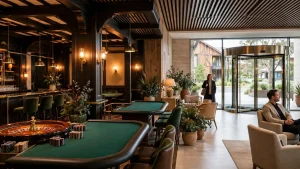
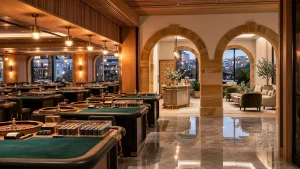
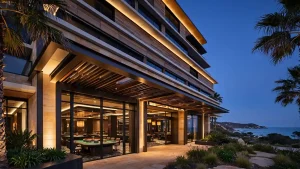
Casino-linked wording can blur the difference between an integrated hotel, nearby accommodation and facilities that still need confirmation.
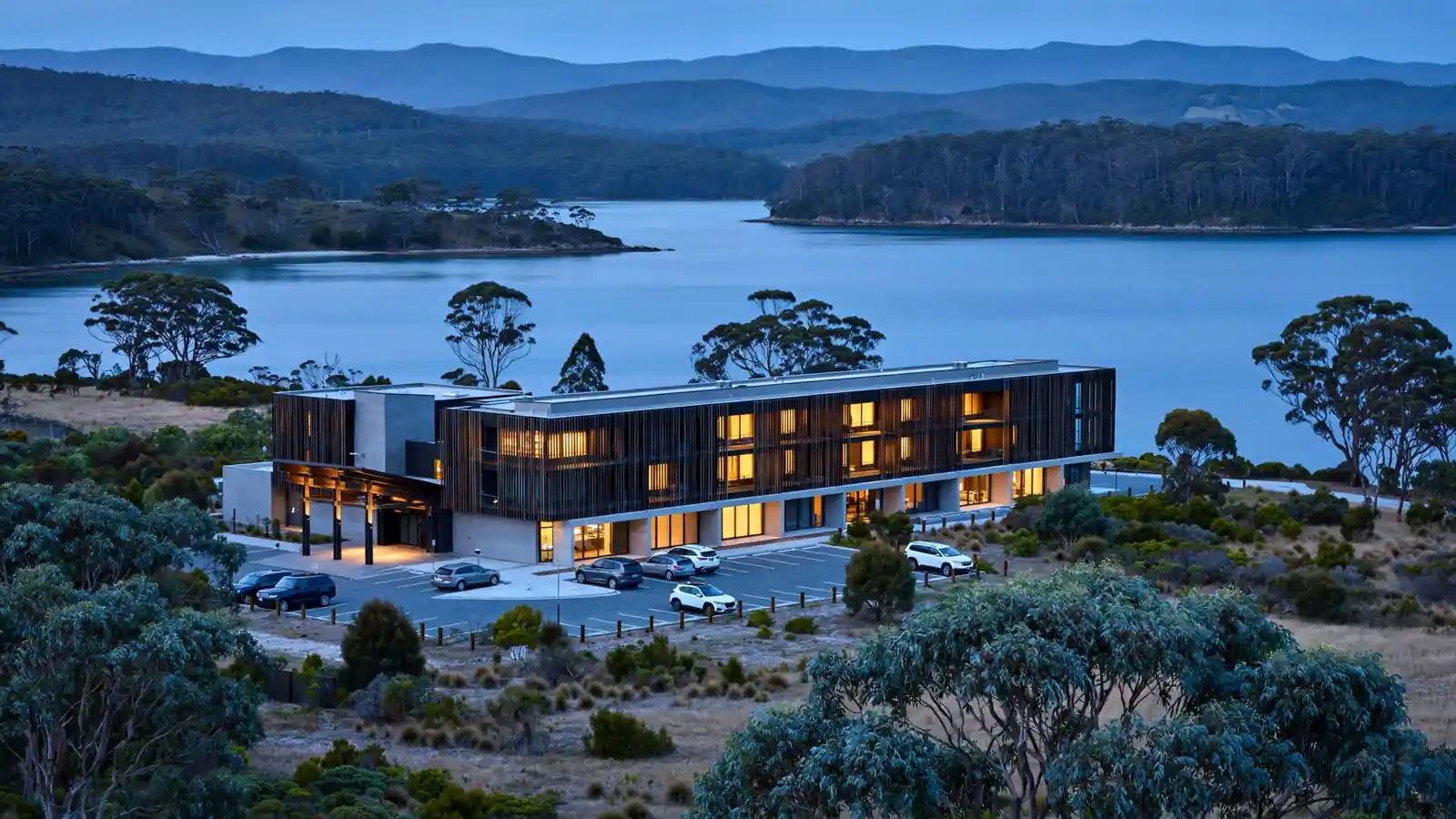
“Casino hotel” sounds like a single, straightforward product: a room in the same complex as a casino. In practice, the label can describe different arrangements. A hotel may be part of a casino property, connected to it, or simply marketed alongside a nearby gaming venue. Those distinctions matter when a booking is being judged on convenience, rather than on the room alone.
I have found that the wording of a listing can do more work than the details behind it. A casino name in a hotel heading does not, by itself, establish that the hotel is operated by the casino, shares its building or offers a direct indoor connection. Nor does a “stay and play” style phrase tell much about what is included. The useful evidence is in the property description and booking conditions: who runs the accommodation, where it is, and what the quoted rate actually covers.
That is the difference between a Tasmania casino hotel and accommodation associated with a casino in a looser sense. The first suggests an integrated venue; the second may mean a separate hotel selected for its location. Neither arrangement is automatically better. A room within a larger property may reduce travel between activities, while an independent hotel may be a more suitable choice for other reasons. The label alone does not settle it.
Choosing an online casino while in Tasmania means checking what is actually known about each option before deciding. This list offers a concise reference to the available licensing, deposit and payout details for 2026.
LuckyVibe
LuckyVibe lists a Curaçao Gaming Control Board licence, OGL/2023/176/0095, held by Hollycorn N.V.
GoldenCrown
GoldenCrown lists a Curaçao Gaming Control Board licence, OGL/2023/176/0095, held by Hollycorn N.V.
Uptown Pokies
Uptown Pokies is listed as operating since 2017 under a Curaçao licence. Its minimum deposit is A$20.
JustCasino
JustCasino is listed with a Curaçao Gaming Control Board licence; no further operator details are provided here.
DragonSlots Casino
DragonSlots Casino is listed under the Curaçao Gaming Authority, with Jumpman Gaming Ltd named.
Vegaz Casino
Vegaz Casino lists Curaçao licence OGL/2024/1335/0780. Its minimum deposit is EUR 20.
Roby Casino
Roby Casino is listed under Curaçao eGaming, with Roby Games Ltd named.
Kingmaker
Kingmaker lists crypto payouts at around 90 minutes and fiat payouts at 1–5 days. Its minimum deposit is A$30.
Wild Tokyo
Wild Tokyo lists crypto payouts at 30–60 minutes and fiat payouts at 1–5 days. Its minimum deposit is A$10, and it lists a Curaçao licence.
Thor Casino
Thor Casino lists a Curaçao licence associated with Antillephone N.V. (Versus Odds B.V.). Its minimum deposit is EUR 20.
Room descriptions deserve the same careful reading. Words such as “premium”, “deluxe” or “city view” are sales categories, not a consistent measure across properties. The meaningful details are concrete ones: bed configuration, room size if stated, bathroom arrangement, accessibility, included services and any restrictions attached to the rate. A photograph can help set expectations, but it may show a sample room rather than the exact room type being booked. A polished image is not a room specification.
“Deal” is another word that needs unpacking. A lower displayed rate may depend on dates, availability, cancellation rules or payment conditions. A package may bundle accommodation with an extra, but the description should identify that extra and explain whether it is included in the price. If the terms are vague, the headline is doing the selling while the booking conditions do the deciding. Read the conditions first.
The key comparison is not simply between a room and its nightly price. It is between what each rate includes and the obligations attached to it. A flexible booking and a restricted booking are not interchangeable just because their room names match. The same applies to packages: an apparent saving has little value if the added item is not wanted or the conditions do not suit the stay.
A useful check is to separate three claims that are often bundled together: that a casino exists at the destination, that a particular hotel is connected with it, and that a specific room or deal is available. Each needs its own evidence. A booking page should identify the accommodation provider and the room category; a casino reference should be clear about the relationship between the two businesses. If a listing leaves that relationship ambiguous, it is safer to treat the hotel and casino as separate parts of the trip.
That distinction also prevents an independent hotel from being mistaken for a casino hotel. “Near” describes a location claim, not ownership or shared facilities. Those properties belong in a different comparison, based on their own address, transport and booking terms. A casino-themed phrase in a listing does not change the identity of the accommodation provider.
For a stay in Tasmania, the practical standard is simple: rely on the named property, its own room description and the terms shown at booking, rather than inferring facilities from a casino-related label. That keeps the decision anchored to what is actually being sold. Labels are not guarantees.
A poker room is a specific gaming facility, not a general label for every place where casino gaming takes place. I keep that distinction clear because venue descriptions can blur live poker, Electronic Gaming Machines (EGMs), and other gaming areas into one broad “gaming” offer. Those are not interchangeable. A poker room implies tables for live poker; it does not, by itself, establish that tournaments are held there.
Attention: A poker room implies tables for live poker, but it does not automatically establish that tournaments are held there.
Tournament information needs its own check. A venue may offer poker without publishing a regular tournament calendar, and a past event listing does not establish that the same event is running now. The useful details are the event date, format, registration process and whether the listing is current. Without those specifics, “poker tournaments” is a subject to investigate, not a reliable description of a current programme.
That distinction matters on the ground. A poker table in a room, a scheduled competition and a casual game are different arrangements. The word “tournament” sounds definitive, but it can conceal whether a listing is historic, occasional or still active. I would treat a dated, venue-issued notice as stronger evidence than an undated directory entry or a broad promotional phrase. No calendar, no assumption.
The same care applies to searches for poker at a Tasmanian casino. A general reference to gaming does not establish that live poker is available, and an image of cards does not establish a poker room or event. The venue name, the activity and the timing all need to line up. If a listing does not say whether it concerns live poker, it may be describing something else entirely.
A sports bar is a separate amenity. Its presence would not prove that poker is offered, just as a poker listing would not establish that a sports bar operates on site. Search results can place these terms close together because they relate to a night out, but they answer different practical questions: what gaming is available, and what kind of venue space is provided. One does not verify the other.
I learned to be cautious with umbrella terms from the service side of the counter. “Gaming” can be useful shorthand in a headline, but it is weak evidence when someone needs to know exactly what is operating. A room name, a dated event notice and a clearly described format carry more weight than a vague claim of “poker action”. Promotional language is not a schedule.
Nor should a poker-room question be confused with accommodation. “Rooms” may refer to lodging in one context and a dedicated gaming space in another. The surrounding wording matters; otherwise, a hotel listing can be mistaken for information about poker facilities, or vice versa. Keep the facility being described explicit.
When assessing any claim, the practical test is whether it identifies the venue, specifies live poker or another activity, and gives current event information where a tournament is mentioned. Those checks do not establish that a particular Tasmanian casino has a poker room; they prevent a broad listing from being mistaken for one. A sports bar mention should be read just as narrowly: as a claim about that amenity, not proof of a poker offer, tournament schedule or other gaming facility. No inference from proximity.
A search for the best casino in Tasmania in 2026 can point in two different directions. One is a question about a physical venue; the other is about gambling through a website or app. They are not interchangeable. A dining room, parking arrangement or bingo session belongs to the venue question. Online pokies, blackjack and roulette belong to a different legal framework.
Legal Restriction
Under the Interactive Gambling Act 2001, an operator based in Australia cannot offer real-money online casino games to people located in Australia.
I have seen the distinction blurred in promotional copy: “play anywhere” sounds like a simple extension of a venue, but it describes remote gambling, not a visit. The legal position turns on where the player is and who provides the service. Under the Interactive Gambling Act 2001, an operator based in Australia cannot offer real-money online casino games to people located in Australia. That restriction covers casino-style games such as pokies, blackjack and roulette.
This does not mean every service that carries a casino label is the same. A physical venue and a remote gaming platform involve different arrangements, and a venue-related question cannot establish that an online service is lawful or available. Likewise, a page about online gambling does not confirm anything about a Tasmanian venue’s facilities. The label does not settle the question. The service does.
Offshore platforms sit in a less straightforward position. It is technically not illegal for an Australian player to use one, but an offshore platform is not regulated under Australian law. That distinction matters: a service being accessible, or describing itself as licensed elsewhere, does not make it an Australian-regulated casino. The law governing the operator and the protections available locally are not the same thing.
“Licensed” is one of those words that can sound more reassuring than it is. An offshore licence is not an Australian licence, and it does not bring the platform under Australian regulation. I would not treat an online offer as an extension of a Tasmanian casino simply because it uses familiar casino language or features similar games. Different service. Different rules.
The same separation helps with mixed searches that combine online play with venue subjects such as dining or bingo. Those terms do not prove that a particular activity is available at a local venue, and they do not alter the rules for online casino games. A request about a physical place needs venue-specific information; a request about remote play raises the national interactive-gambling rules.
In practical terms, the Australian-run online casino model cannot legally provide real-money casino games to people in Australia. Offshore sites are not regulated here, even though player use is technically not itself illegal. Neither point should be stretched into an endorsement. Legal access, consumer protection and the existence of a physical casino are separate questions.
That is the divide worth keeping clear: a Tasmanian casino visit is a venue matter; an online casino is a remote gambling service subject to a different legal test. Familiar names and shared game formats do not merge them. No shortcut.
Accommodation described as being “near a casino” is not necessarily part of a casino, connected to one or eligible for a casino promotion. The wording can refer to an independent hotel, motel, apartment or other lodging option. That distinction matters: proximity, ownership and package terms are separate claims, and one does not establish the others.
I have seen accommodation copy blur those lines. A property may appear alongside casino-related results because of location language, while having no stated relationship with the venue. “Casino deal” can sound like a bundled offer, but the label alone does not tell anyone who provides the room, what is included or whether a gaming venue is involved. Marketing shorthand is not a booking condition.
For Tasmania, the phrase “accommodation near a casino” needs a confirmed venue and location before distance can be assessed. Without those anchors, a map result or a lodging description cannot be treated as evidence of how close a property is. Nor does a broad search for Tasmanian casino accommodation establish that a casino operates a hotel or that independent rooms are available for particular dates.
The same caution applies to promotions. A lower displayed rate, a package headline and a casino-linked accommodation offer are not interchangeable. A genuine offer should identify the accommodation provider, the stay dates, the included services and any conditions that affect the price. If those details are absent, the word “deal” carries little practical meaning. Fine print matters.
There is also a difference between a casino hotel and a hotel selected for convenience. A casino hotel would imply a direct connection between the gaming venue and the accommodation operation. An independent property remains independent unless a stated arrangement says otherwise. A nearby address does not establish shared ownership, guest privileges, transport or access to venue services.
In my experience, this is where comparisons go wrong: people see a location phrase and assume the rest. The sensible test is documentary, not atmospheric. The property listing should name the operator and address; any package should set out what is included; and any claimed casino connection should be explicit. A map can help assess a confirmed address, but it cannot verify a promotional relationship.
“Best value” is another elastic phrase. Without a current price, dates and comparable room terms, it is not a measurable verdict. A rate may depend on availability or conditions that change, so an old promotion should not be treated as a live offer. No reliable accommodation recommendation can be built from a headline alone.
For someone planning a stay around a casino visit, the practical distinction is straightforward: lodging can be considered on its own merits, while claims of proximity or affiliation need separate confirmation. Until a specific property and venue are established, naming accommodation, quoting distances or describing a Tasmania casino package would be guesswork. Keep the categories apart. Short version: proximity is not partnership.
A casino visit starts with the venue’s identity, not a map pin. In Tasmania, names used in directory listings, travel pages and social posts may not be enough to establish which operator or premises a detail refers to. I have seen small naming differences create practical confusion: a telephone listing can belong to a general business, while a map result may point to an entrance or nearby property rather than the public arrival point.
For a useful location check, the address and the destination shown for navigation need to match the venue’s own current contact information. A map can help with orientation, but it is not an authority on entrances, access routes or parking. The pin is only a pin.
The same distinction applies to a car park. A nearby parking symbol does not establish that parking is operated by the casino, available to visitors, or accessible from the entrance shown on the map. Those details matter when planning arrival, particularly where a listing combines several businesses or uses a broad precinct name. Parking arrangements are operational information, not a feature that can safely be inferred from proximity.
Contact numbers deserve the same care. A number copied between directories can persist after a business listing changes, and a general switchboard may not handle questions about a particular venue. The dependable route is an operator-controlled contact channel that identifies the relevant premises and gives a current way to make an enquiry. I would not treat a number as current simply because it appears beside a casino label in a third-party listing.
Questions about baccarat or craps are also venue-specific. A game name in an old review, a general casino description or a directory category does not establish that the game is currently offered at a particular Tasmanian venue. Game availability can be a separate operational detail from a venue’s address or public contact information. A general label is not a live floor plan.
The word “bar” can cause a similar mismatch. In a map or directory, it may describe a nearby business rather than a facility within a casino. A search result alone does not establish that the venue has a bar, its location, or whether it is open to the public. These distinctions are best resolved through the venue’s own published information rather than an assumption drawn from nearby listings.
Concert references should be handled as dated notices, not permanent venue details. An event listing does not establish a regular programme or confirm that a venue is hosting concerts now. For practical planning, event information belongs with the organiser’s current announcement; general location and contact details should be checked separately.
I keep these checks separate because each answers a different question: where the premises are, how to contact the operator, how arrival works, and what is offered on site. Combining them into one directory snippet makes the information look settled when it may not be. For a Tasmanian casino visit, the reliable details are the ones tied to the exact venue and confirmed through its own current channels. Shortcuts mislead.
Breakfast, a buffet and a rewards programme are separate things, even when a venue is described as a resort. The word “resort” can suggest a bundle of facilities, but it does not establish that breakfast is included, that a buffet operates, or that guests earn rewards. For Tasmania, a casino buffet breakfast or local rewards scheme should not be assumed without current venue-published terms.
That distinction matters when comparing an accommodation package with a promotion. A breakfast inclusion belongs to the stay and should be set out with the room booking conditions: what is included, when it is served and whether access is limited to particular bookings. A rewards offer has different rules, such as who can join, what activity qualifies and how points or benefits are applied. The label alone settles none of those details.
I have seen promotional language do a lot of work with very little precision. “Complimentary” sounds unconditional; the actual offer may depend on a booking type or other stated terms. “Rewards” sounds like a lasting benefit; the value depends on the rules for earning and using it. In either case, the written conditions matter more than the headline.
Some online gambling promotions use free spins. That is not evidence of a Tasmanian casino benefit, and it should not be confused with breakfast, a buffet or an in-person loyalty programme. Australia’s Interactive Gambling Act 2001 prohibits operators from providing real-money online casino games to people in Australia, so online bonus examples are context about promotion mechanics, not an invitation to play.
A report by psu.com describes free-spin winnings as subject to wagering requirements in the range of 20 to 50 times before withdrawal. Another specialist review describes a 30-times wagering condition on free-spin winnings.
A report by psu.com describes free-spin winnings as subject to wagering requirements in the range of 20 to 50 times before withdrawal. A separate specialist review describes a 30-times wagering condition on free-spin winnings. Those figures come from specific reports, not a universal rule. They illustrate why “free” does not necessarily mean withdrawable: a condition may require further wagering before winnings can be cashed out.
The precise calculation matters. Terms may define which games count, how winnings are treated and what must happen before a withdrawal is allowed. The promotional headline rarely carries that detail. Read the conditions as a contract, not as a description of cash already received. A headline is not the whole offer.
A local breakfast or buffet listing needs current venue information; a rewards claim needs its own published programme rules. Neither follows simply from the word “casino resort.” The same separation applies to employment: searches about casino jobs concern vacancies and recruitment, not guest amenities or promotional benefits. Job titles and openings change, so an old listing should not be treated as a current opportunity.
From the operator’s side, the distinction is practical: each benefit has its own eligibility, timing and conditions. A meal inclusion, a points programme and a job vacancy are not interchangeable parts of one package. Check the specific terms attached to the particular offer or listing. Fine print first.
“Open” can mean several different things: a venue is operating, a particular area is accessible, or a listed event is going ahead. I keep those claims separate. A general business listing may not establish the status of a specific casino operation, and an old announcement is not evidence that a reopening has happened. The wording matters.
For anyone assessing whether a Tasmanian casino is open, the useful distinction is between a dated operational update and a page that simply remains online. Opening hours can change, while event pages may describe a past programme. A date attached to the information is therefore part of the claim, not decoration. Without current, venue-specific information, neither an opening time nor a reopening date should be presented as settled.
Reopening language deserves particular care. “Set to reopen” describes an intention or plan; “reopened” describes an event that has already taken place. Those are not interchangeable. The same applies to development: a proposal, an approval, work under way and a completed project are different stages. Search results can preserve an earlier stage long after circumstances change. Read the verb closely.
Entertainment announcements need the same discipline. A named event may have been scheduled for a particular date, but that does not establish a continuing programme or confirm that the event is still proceeding. I treat a current listing as evidence of what it says on its date, not as a standing promise. No broad claim about regular entertainment follows from a single event notice.
Employment information is similarly time-sensitive. A vacancy, recruitment announcement or development-related job reference does not, by itself, establish that a venue is currently hiring or that a project has progressed. Those claims need a direct, current basis. Otherwise, they are easy to repeat and hard to rely on.
A casino review should also distinguish observed details from assumptions. A reviewer may describe a visit at a particular time, but that account cannot establish today’s operating status, future events or development plans. I read reviews as dated snapshots. Useful context, not a live notice.
Menu searches belong to a separate question about dining, not proof that a casino is open or hosting entertainment. A menu page can remain visible even when its practical relevance has changed. That needs its own check.
For the phrase “best casino in Tasmania” to mean anything in 2026, operating status and current programming would need to be established before judgments about the experience could carry weight. An attractive event reference or confident reopening headline is not enough on its own. Dates, wording and the stage of any announcement do the real work.
Small distinctions. Big difference.
A restaurant listing can make a casino visit look straightforward: choose a venue, look over the menu and reserve a table. The practical detail is less tidy. A restaurant’s name, current service and booking arrangements need to be tied to a specific operating venue, rather than inferred from the word “casino” in a search result.
I have learned to separate a confirmed dining room from a description that merely suggests one. Hospitality information can change independently of the casino’s wider identity. A venue may have its own operator, menu and reservation system; a casino’s general page may not carry those details. An old listing can remain visible after the underlying arrangement has changed. That is ordinary directory drift. Not a dining plan.
For anyone comparing restaurants at a casino in Tasmania, the useful checks are concrete: the exact venue name, whether it is currently serving, the menu that applies on the intended date, and the route for making a reservation. A photograph or an undated menu is not enough to establish current service. Nor does a restaurant result establish that every listed feature belongs to the casino itself; nearby businesses can be grouped together in maps and directories.
I would also treat words such as “signature” or “destination” as descriptions, not evidence. In hospitality, promotional language can describe a concept without confirming what is available on a particular evening. Menus, service arrangements and booking rules are the operating details. Those are what matter.
A sensible comparison does not require assumptions about cuisine, price, dietary options or table availability. Those details should come from the restaurant’s own current information or a direct confirmation from the venue. If the listing does not identify who operates the restaurant, that is a reason to check before relying on it—not a basis for filling in the gap from another casino’s offering.
The same distinction applies to the phrase “casino restaurant.” It might refer to a restaurant within a casino property, a separate dining business nearby, or a broad directory category. The label alone does not settle the location or relationship. I would look for a named address and an official reservation channel that clearly belongs to the dining venue, then confirm that the menu and service information are current.
That approach keeps a Tasmania casino restaurant search grounded in verifiable hospitality details rather than assumptions drawn from another state, another property or an outdated listing. Until the venue itself confirms the particulars, there is no reliable basis for describing its restaurant, menu, opening schedule or booking process as established. No borrowed details.
A casino and a spa are separate propositions. The word “resort” can make them sound like one package, but it does not establish that a particular venue has treatment rooms, a day-spa service or any other wellness facility. I keep those claims separate: a casino’s existence cannot, by itself, confirm a spa on site.
The distinction matters because “spa” can describe very different things. It might refer to a dedicated business with bookable treatments, a wellness facility available only to guests, or simply a phrase used in promotional copy. Those are not interchangeable. A treatment menu, booking arrangements and access rules would need to be attached to a named facility before the label tells anyone what is actually offered.
The same caution applies to broader resort language. A bar, a spa and a casino are different amenities, each with its own operating arrangements. A reference to bars in Tasmania does not establish that they belong to a casino, just as a casino listing does not establish a day spa. The wording may suggest a combined destination; the details determine whether one exists.
I have seen how a polished amenity label can do more work than the underlying description. “Relaxation” sounds definite, while saying what the service is, who can use it and how it is booked requires specifics. Without those particulars, the label is atmosphere, not a usable description. Nothing concrete follows from it. A quiet distinction.
Careers and dress-code information also belong to separate categories. A vacancy is not evidence of a spa facility, and a dress policy does not describe resort services. Those details can change independently and should not be inferred from a venue’s general image. Folding them into a spa claim creates a misleading picture of what is available.
For Tasmania, a casino day spa should therefore be considered a distinct facility claim, not a feature that comes bundled with the word “casino” or “resort.” The useful description would identify the service itself and the conditions attached to it. Without that level of detail, the term alone cannot establish treatments, access or facilities. A label is not a service.
Food and a swimming pool are separate amenities, not automatic features of a casino. A venue’s name or resort-style presentation does not establish what is available on site. In Tasmania, claims about casino food options, a food court or a pool should be checked against current information for the specific property before they are treated as part of a visit.
The distinction matters because broad descriptions can blur together facilities that may be run or presented separately. “Dining options” could refer to a particular restaurant, a café, or something else; it does not, by itself, confirm a food court. Likewise, a pool mentioned in nearby accommodation material would not establish that casino guests can use it, or that it belongs to the casino venue.
I have seen how a convenient label can do more work than the detail behind it. “Resort facilities” sounds comprehensive; the practical question is which amenity is actually on site, who can use it, and when. Without those specifics, it is only a label. Not a booking detail.
For food, a useful check is whether the venue names the option and states its location and service arrangements. For a pool, the relevant details include whether it is part of the casino premises or a separate property, and whether access is available to visitors. Those are not interchangeable with a general claim that a casino has food or leisure facilities.
Searches for food and pool amenities around a Tasmanian casino therefore need to be treated as distinct from confirmed restaurant listings or accommodation facilities. A property may offer one, both or neither; assumptions based on the casino label can lead to an inaccurate plan. Before relying on either amenity, confirm it directly with the venue’s current published information.
Yes. Online pokies use a Random Number Generator, and each spin is independent, so earlier results do not affect later ones.
Australian-run online casinos cannot offer online casino games such as pokies to people in Australia. It is technically not illegal for Australian players to use offshore platforms, but those platforms are not regulated under Australian law.
Region blocking uses a player’s IP address to identify their location and can prevent access to games or providers in that region. Blocked games may not appear in the lobby or may fail to load.
Free-spin winnings commonly have wagering requirements of 20x to 50x, and the stated requirement for free-spin winnings is 30x before withdrawal. Pokies typically contribute 100% toward wagering requirements.